From Journalism to Evangelism: The Story of Moses Mukitale

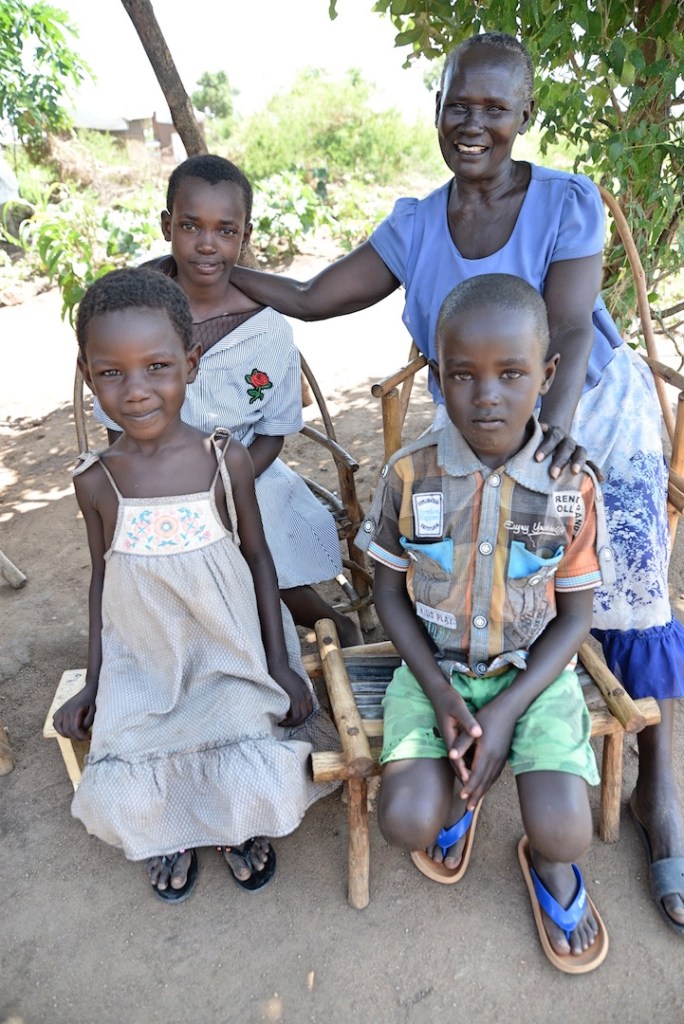
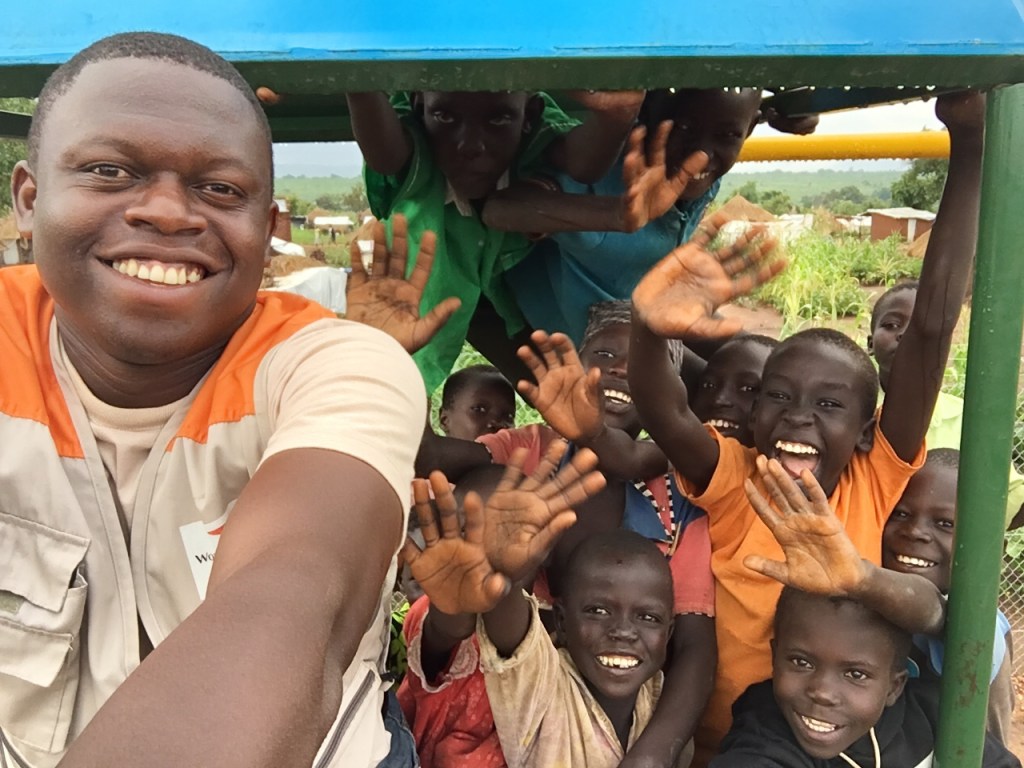
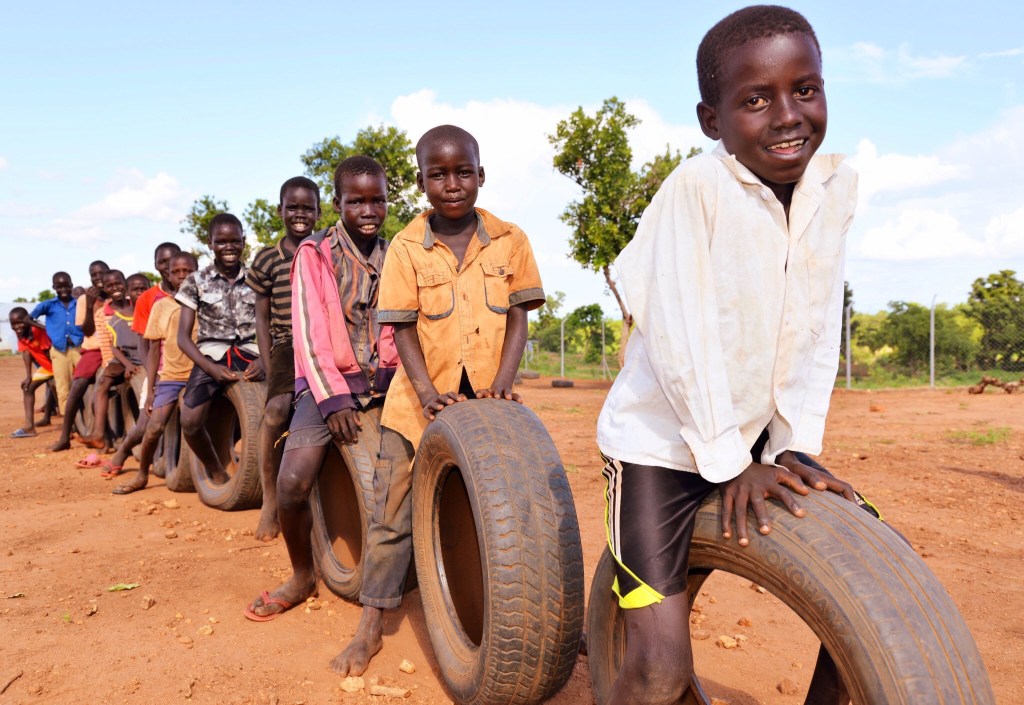
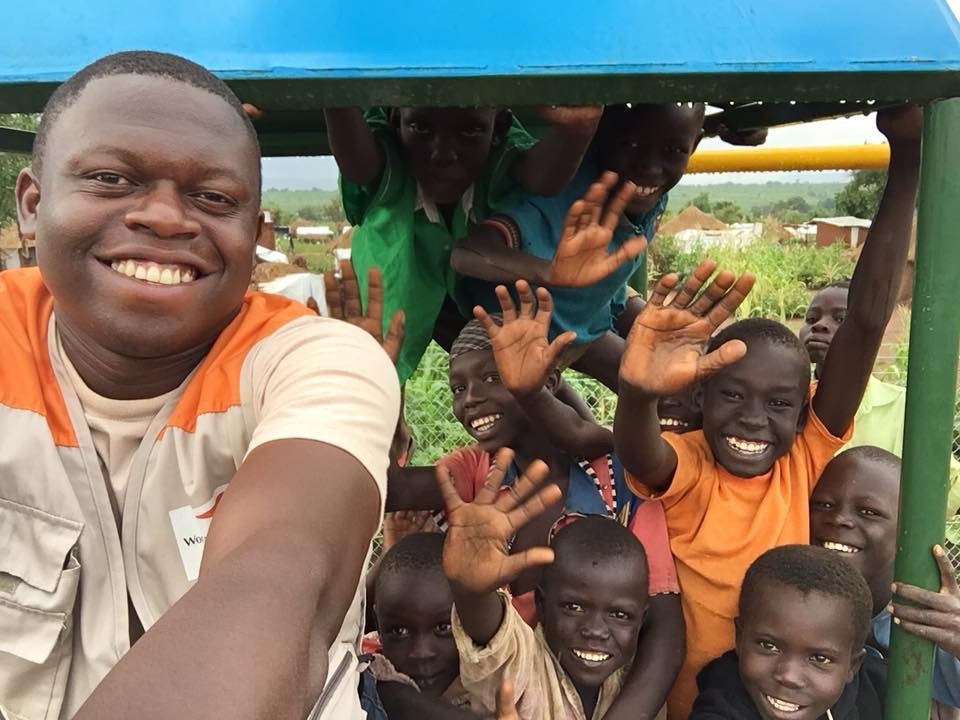
Sharing a moment of joy with a South Sudanese refugee children in Northern Uganda. As a World Vision Communications Officer, Moses witnessed firsthand and documented the resilience and hope of these incredible children.”

Moses Mukitale never imagined that his life would take such a dramatic turn. Born and raised in Uganda, he built a promising career in journalism, earning a Bachelor’s degree in Mass Communication from Uganda Christian University in 2011.

His passion for storytelling led him to work for WBS Television, where he spent four years as a news reporter, covering politics and general news. His work placed him at the heart of Uganda’s fast-changing political landscape, giving him firsthand experience with the country’s leadership, policies, and social issues.

Graduation Day (2011), from Uganda Christian University, with a Bachelors in Mass Communication/ journalism

His career took a different path when he joined World Vision, an international aid agency, as a communications officer. There, he focused on story writing, photography, social media, and reputation management, using his skills to highlight the impact of humanitarian efforts in Uganda. It was a fulfilling job—one that combined his love for storytelling with a noble cause. Yet, something deep within him was stirring.

Some of his articles and feature stories with World Vision have been featured by international news agencies, including Reuters. Notably, his blog highlighting the challenges refugee children face while adapting to life in a refugee camp gained significant recognition.

https://news.trust.org/item/20170823150005-kb5av/

A New Calling in America

In 2018, Moses moved to America, excited about new opportunities but uncertain about what lay ahead. It wasn’t long before he felt a shift in his spirit—an undeniable conviction that he was called to something greater than media and communications.
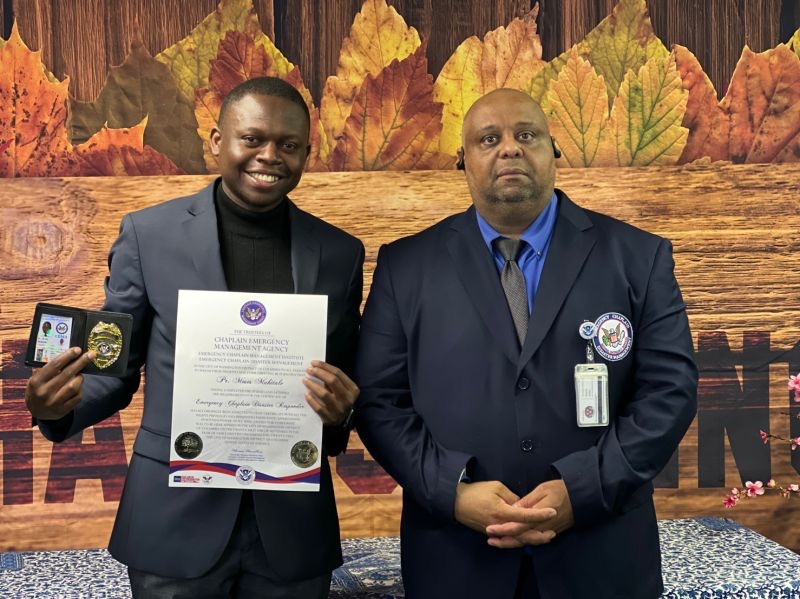
Moses receiving his chaplain Badge from the
Federal Emergency Management Agency (FEMA)

“When I got to America, the Lord placed a heavy burden on me to become an ambassador of the Kingdom to the American people,” Moses recalls. “The instruction was clear—share the gospel with all men using any means possible.”

The call was too strong to ignore. He could not remain silent. While he had spent years telling the stories of politicians and communities, he now felt an urgency to tell the greatest story of all—the gospel of Jesus Christ.

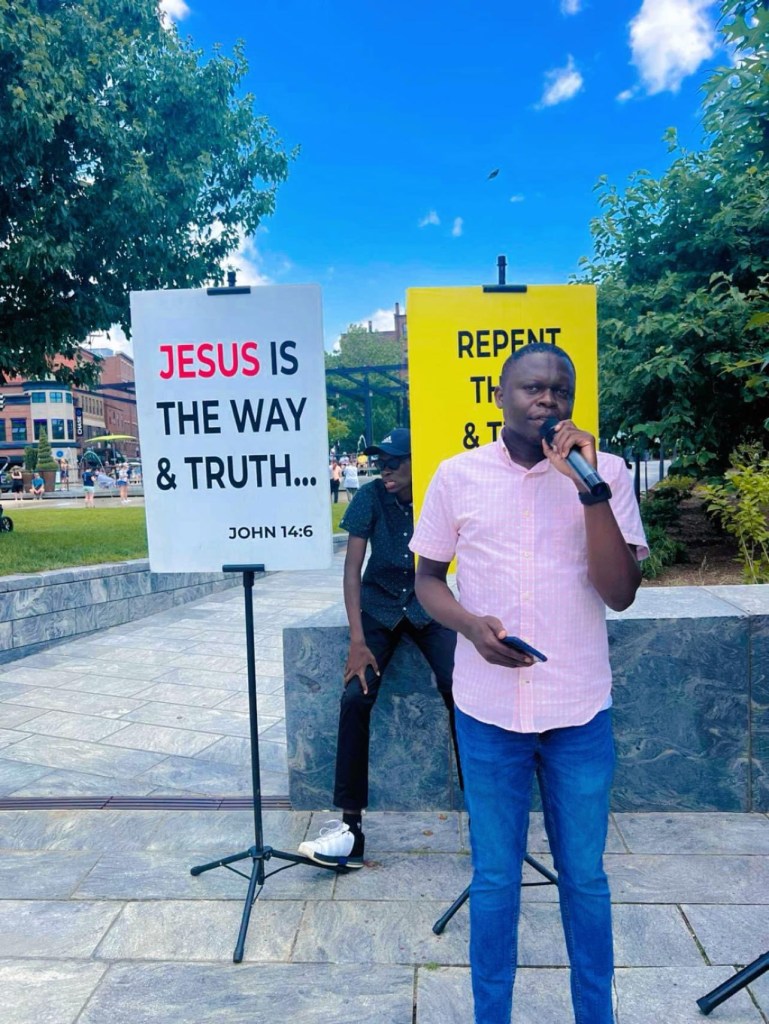
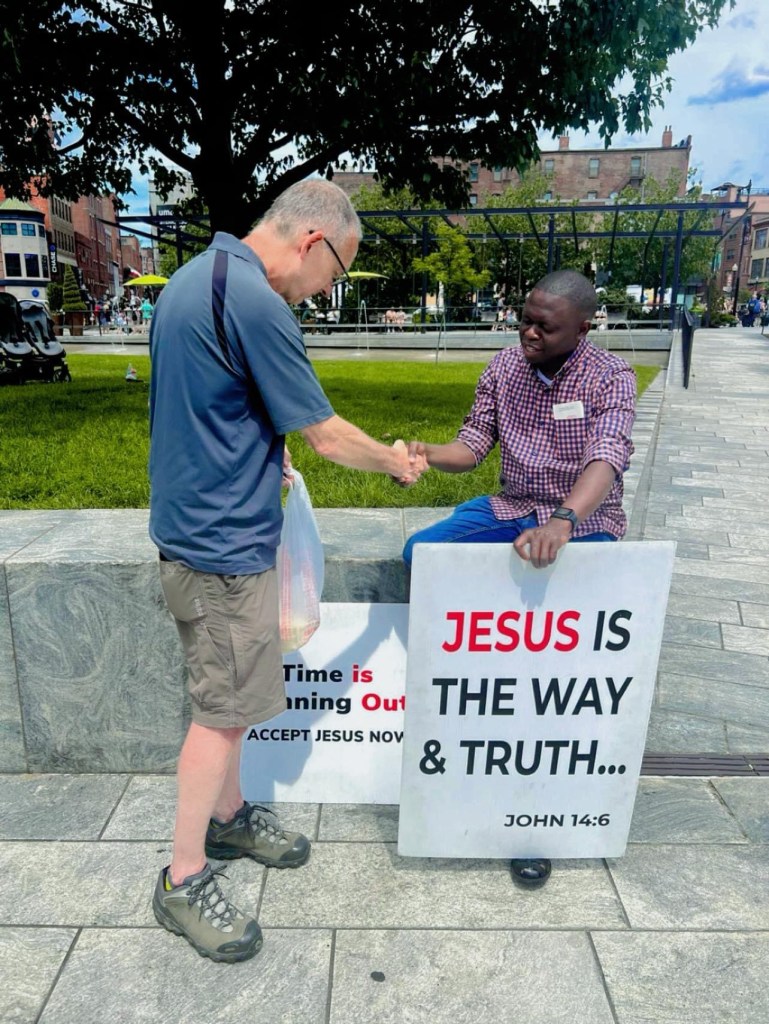
Moses Sharing the gospel Downtown Boston

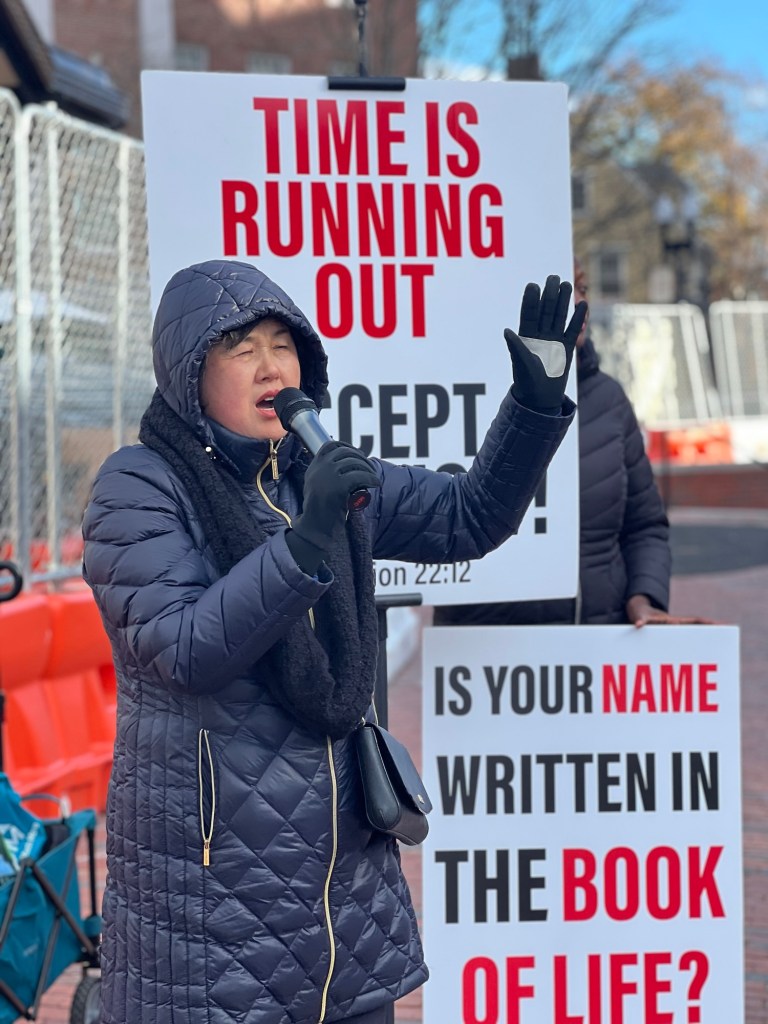
Street Evangelism in Boston

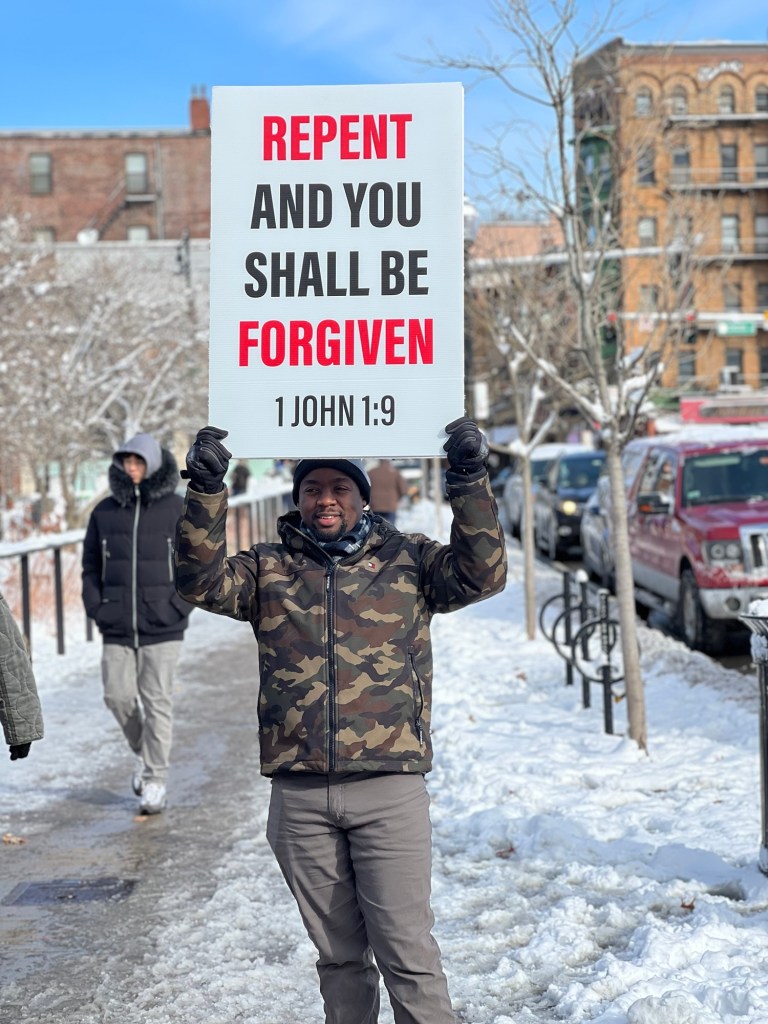
Determined to obey, Moses committed himself to street evangelism in Boston, dedicating two days every week to preaching on the streets. With a Bible in one hand and a heart full of passion, he and his friends take to the streets, ministering to anyone willing to listen. They pray for the sick, hand out gospel tracts, and share the message of salvation with students, professionals, and the homeless alike.

“America is blessed with wealth and technology, but spiritually, many people are lost,” Moses explains. “There is a deep hunger for truth, and people need to hear about Jesus.”

Despite the challenges—cold winters, rejection, and occasional hostility—he remains steadfast. Each soul that turns to Christ strengthens his resolve.
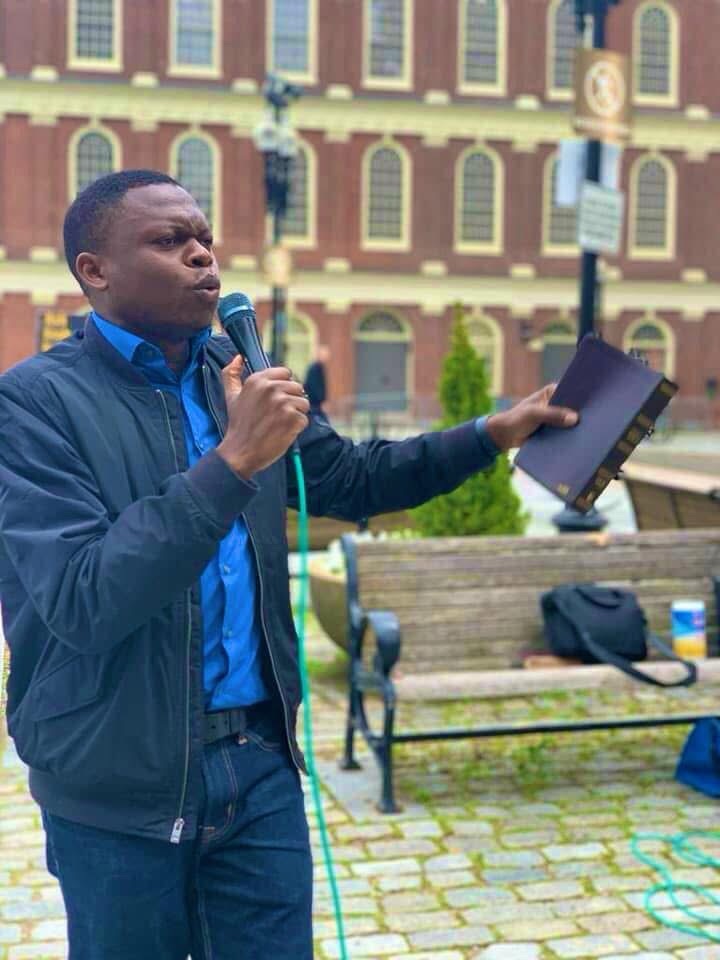
Moses sharing the gospel in the North End, Down town Boston.

Using Social Media for the Gospel

Beyond the streets, Moses has dedicated all his social media platforms, including LinkedIn, to sharing the gospel. Instead of using his professional background to build a corporate brand, he has transformed his pages into a digital pulpit. His posts range from scriptural teachings and testimonies to words of encouragement and calls to repentance.
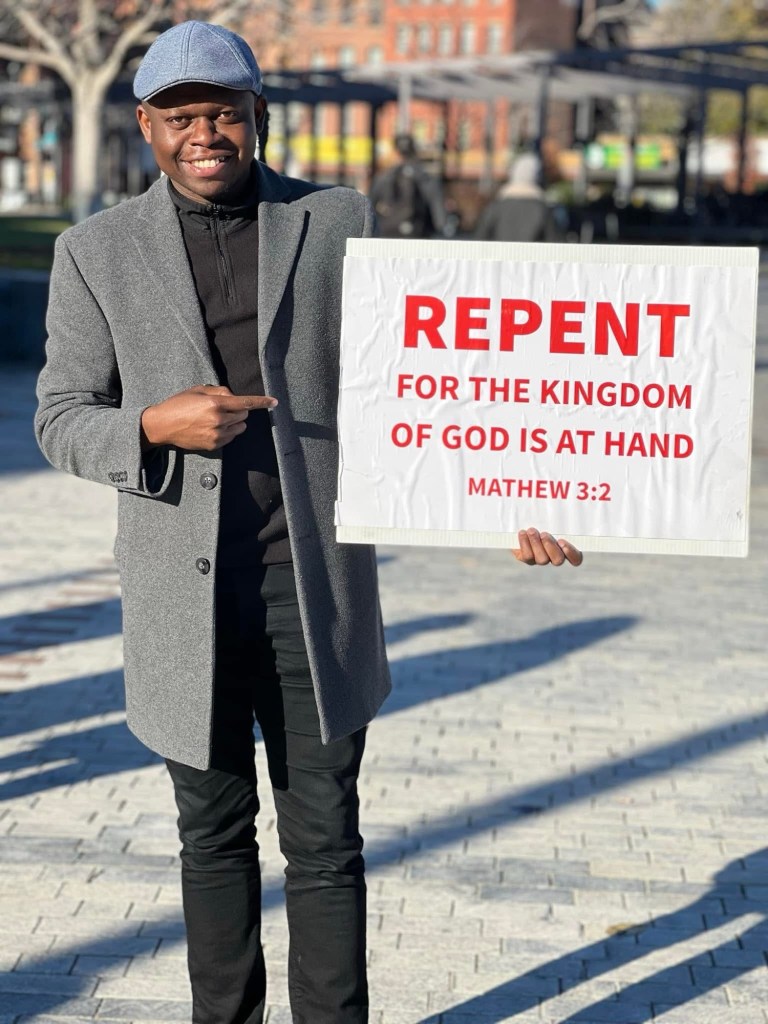
Moses sharing the gospel Downtown Boston.

“God told me to use every means possible, and in today’s world, social media is one of the biggest mission fields,” he says.

A Life Fully Devoted to Christ

Moses Mukitale’s journey from journalism to evangelism is a testament to the power of God’s calling. He walked away from a promising media career to become a full-time ambassador of Christ. Whether on the streets of Boston or through his online presence, his mission remains the same—to share the gospel and win souls for Jesus.

Sharing the gospel in the North End, Boston

Moses is also an ordained minister in the state of Massachusetts with a license to officiate weddings. Since his ordination by American Marriage Ministries in 2022, he has had the honor of officiating two weddings. For him, this is another way of sharing the gospel—helping couples leave sin behind and enter into the sacred covenant of holy matrimony.
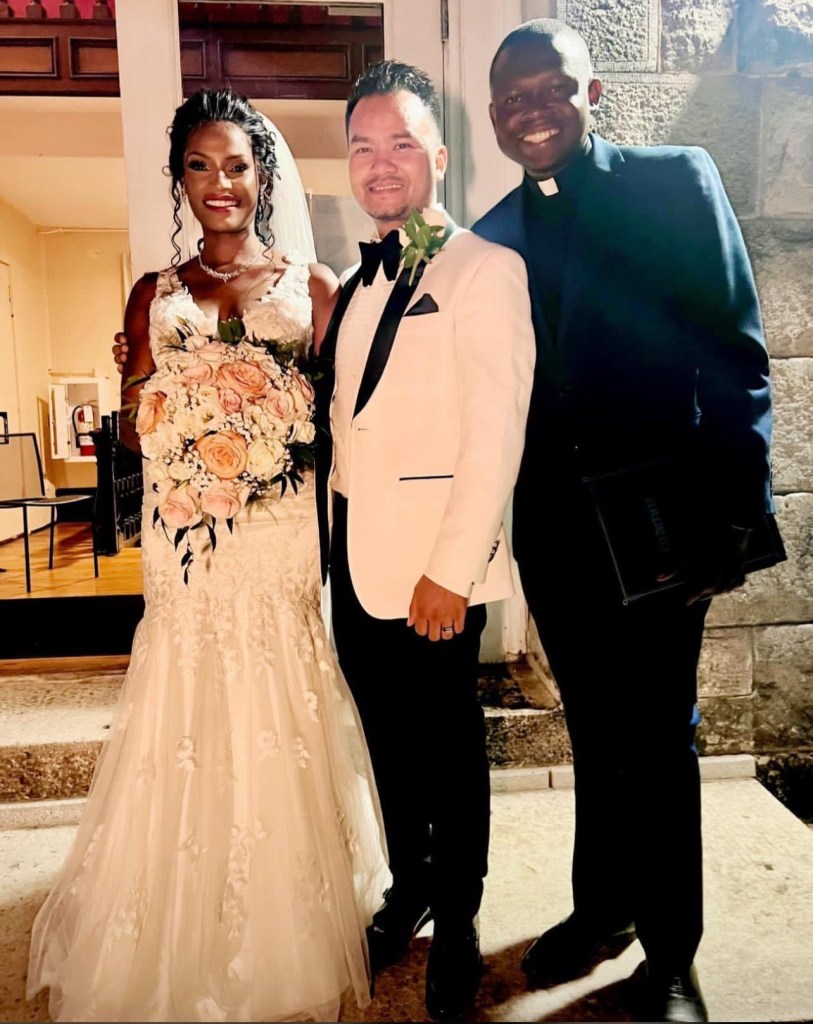
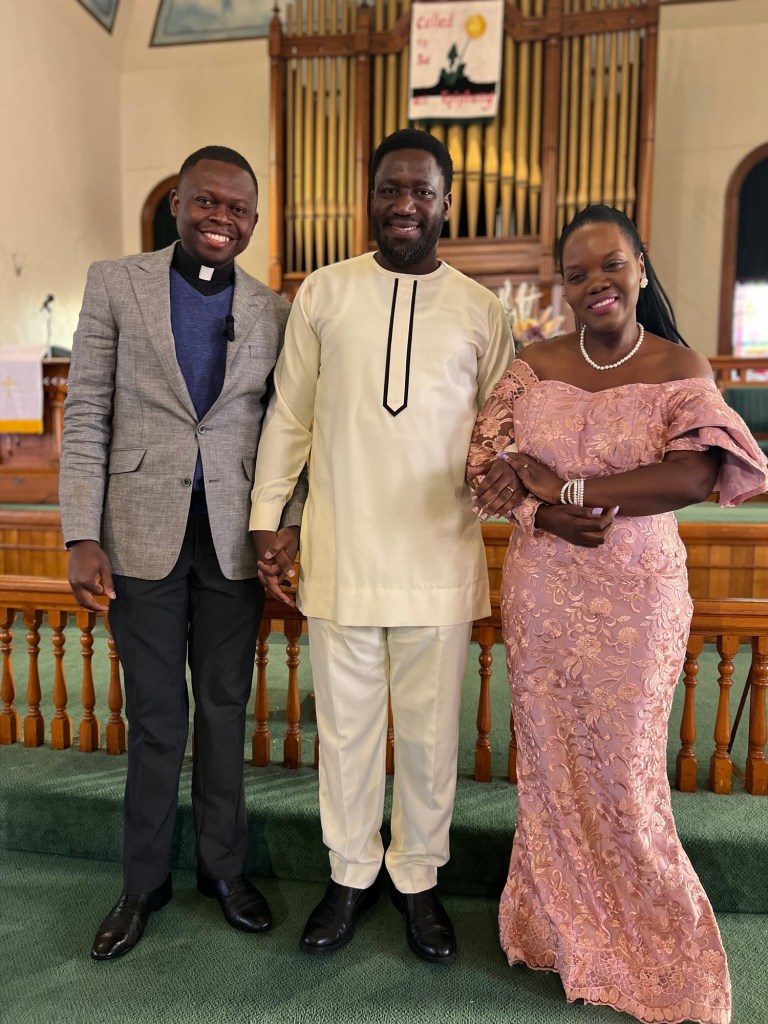
The Bible is clear: ‘Let marriage be held in honor among all, and let the marriage bed be undefiled, for God will judge the sexually immoral and adulterous.’ — Hebrews 13:4. Marriage is a gift from God, and any sexual relations outside of it are against His will.”

For Moses, the greatest news he can ever report is the good news of salvation.

Preaching the Gospel in All Seasons: The Unwavering Mission of Evangelist Moses Mukitale

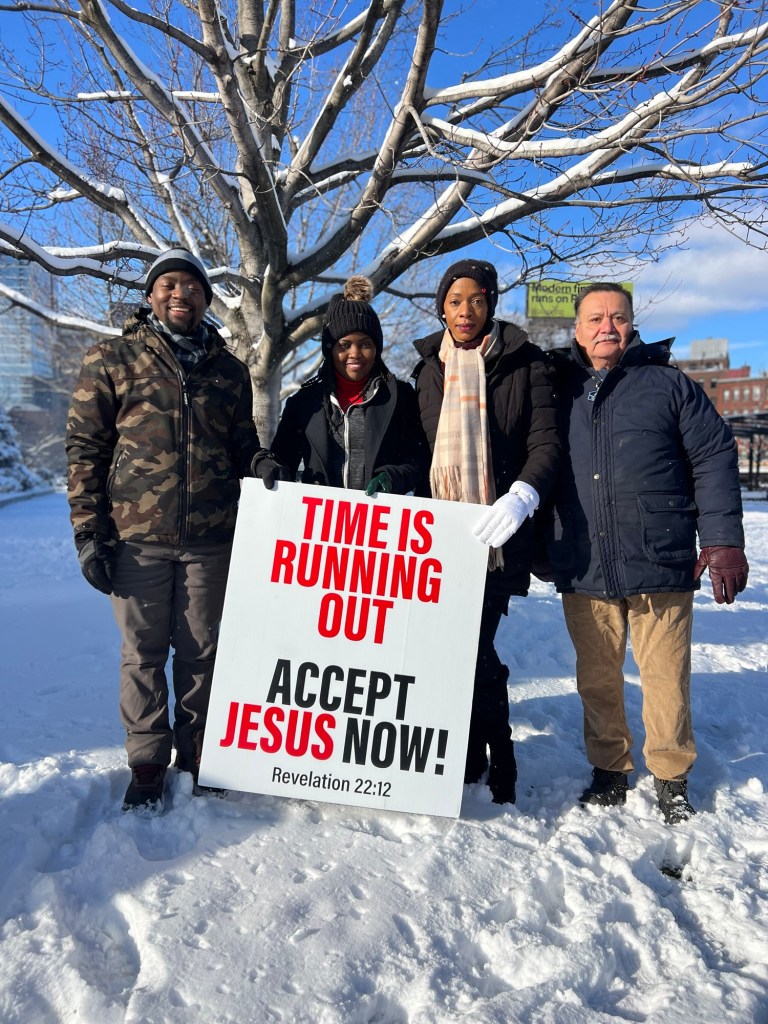
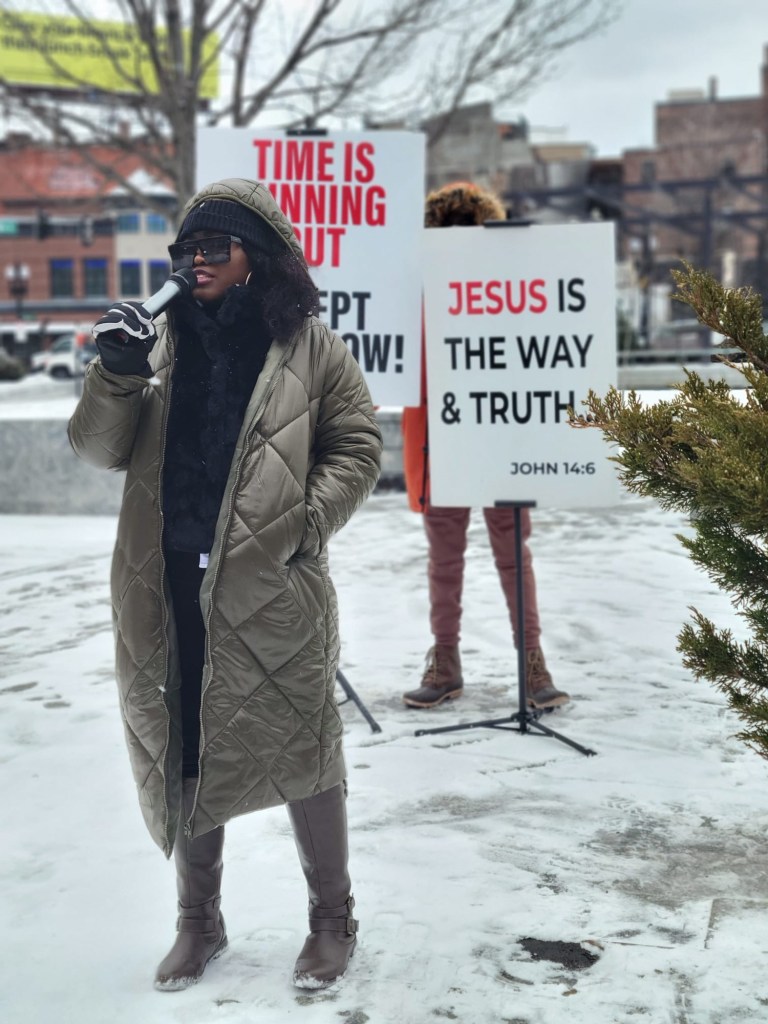
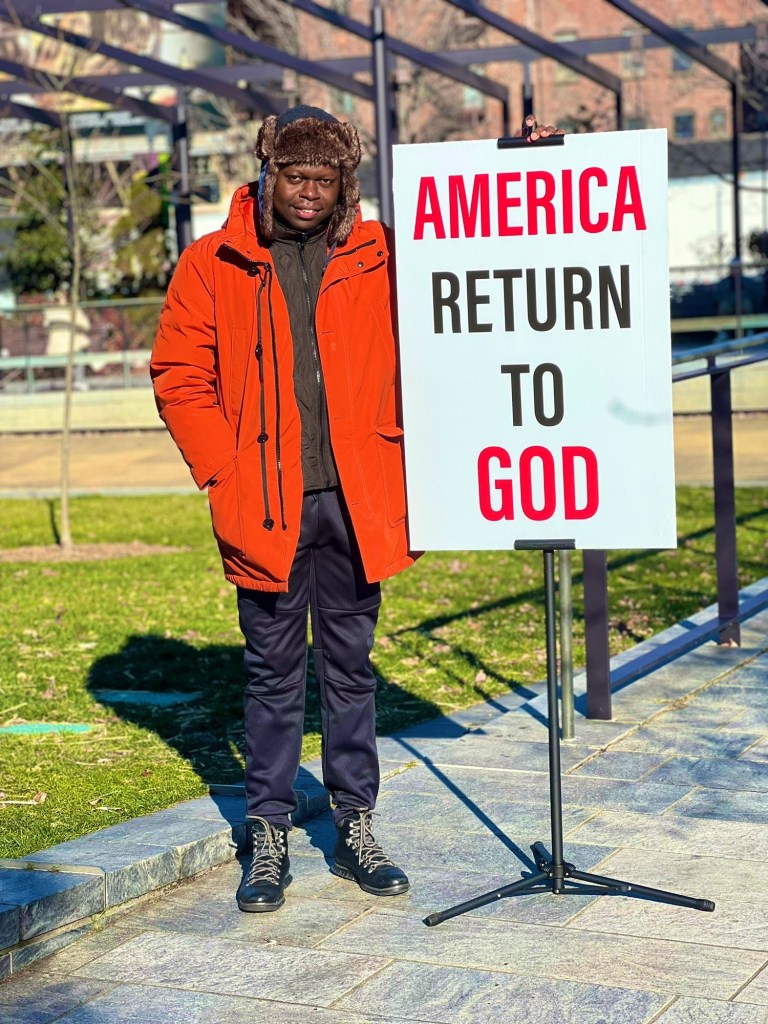
Evangelists holding gospel banners downtown Boston, amidst the snow.

In the heart of Boston, where the winds howl and the snow blankets the streets in icy silence, Evangelist Moses Mukitale and his team stand as unwavering heralds of the gospel. Twice every week, they step out onto the streets, braving the biting cold and unpredictable weather to proclaim the message of Jesus Christ. Massachusetts, one of the coldest states in America, often tests their endurance with heavy snow and freezing temperatures, yet their commitment remains steadfast.

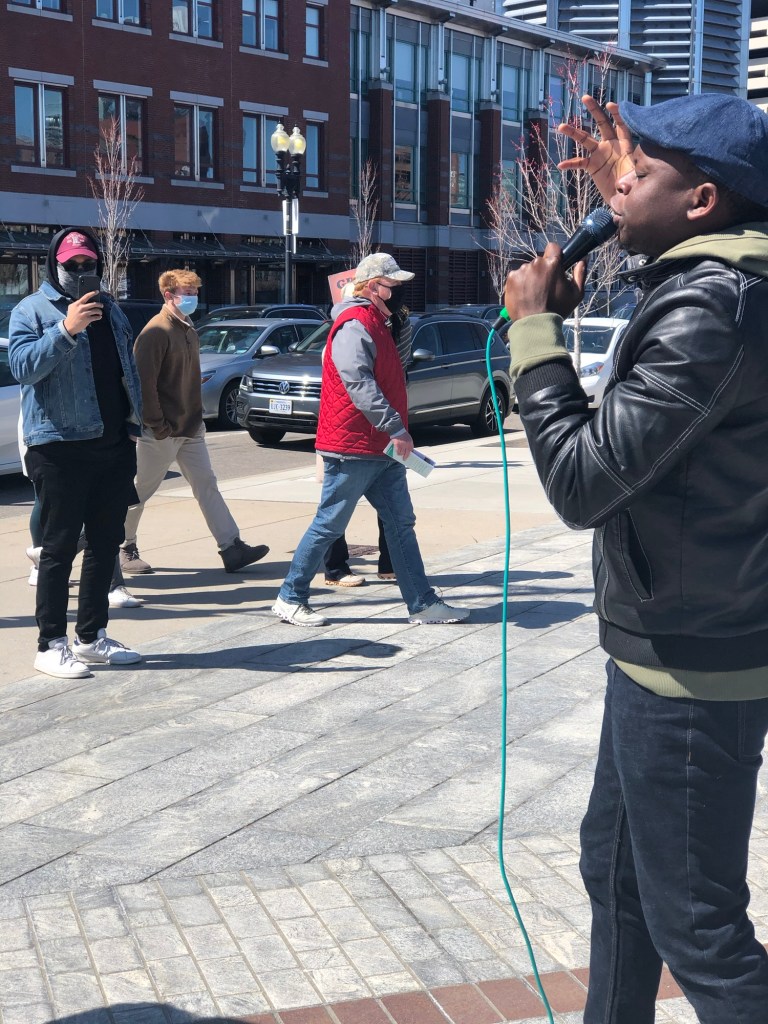
Moses preaching the gospel on a very cold Saturday morning in Boston.

For Moses and his team, preaching the gospel is not a seasonal calling—it is a divine mandate. They draw strength from the words of the Apostle Paul: “Preach the word; be prepared in season and out of season; correct, rebuke and encourage—with great patience and careful instruction” (2 Timothy 4:2).

The weather may change, but the urgency of salvation does not. Every soul deserves the opportunity to hear the gospel, whether in the heat of summer or the dead of winter.

Sharing the message of the cross downtown Boston.

There are days when the cold is nearly unbearable. The wind cuts through their coats, and their hands grow numb as they hold up banners and distribute gospel tracts. Some pedestrians hurry past, too concerned with the chill to stop and listen, while others, touched by the team’s persistence, pause to hear the good news.

Moses preaching the gospel outside the Haymarket in North end.

Even on snowy days, when the streets are nearly empty, Moses and his fellow ministers remind themselves of Jesus’ words: “The harvest is plentiful, but the laborers are few. Therefore, pray earnestly to the Lord of the harvest to send out laborers into His harvest” (Matthew 9:37-38).

Despite the challenges, they have witnessed God’s faithfulness time and again. People have stopped in their tracks, convicted by the Word. Some have received prayer for healing and salvation, and others have returned, weeks later, with testimonies of how the gospel transformed their lives.

While Preaching the gospel, passersby usually stop and record the ministration on their phones

The team knows that no effort is wasted. As Isaiah 55:11 declares: “So shall My word be that goes out from My mouth; it shall not return to Me empty, but it shall accomplish that which I purpose.”

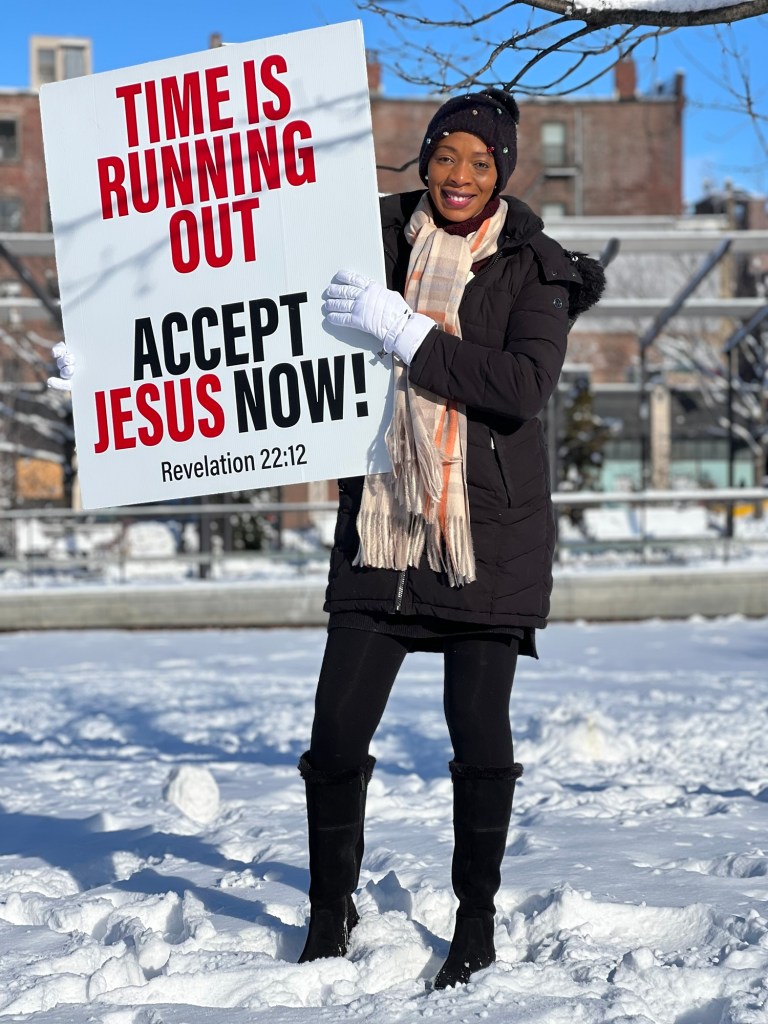
Minister Marjorie Kukiriza holding up a gospel banner in North end

Though there are rare occasions when the cold forces them to stay home, Moses and his team press on, knowing that eternity is at stake. For them, the mission is clear: “Go into all the world and preach the gospel to all creation” (Mark 16:15). No storm, no snow, and no icy wind can silence the message of Jesus Christ.

Minister Ronald Mwesigwa holding up a gospel banner in Boston
Minister Vivian sharing the gospel downtown Boston

Bringing Revival to Harvard: The Evangelistic Mission of Pastor Judy Kang and Moses Mukitale

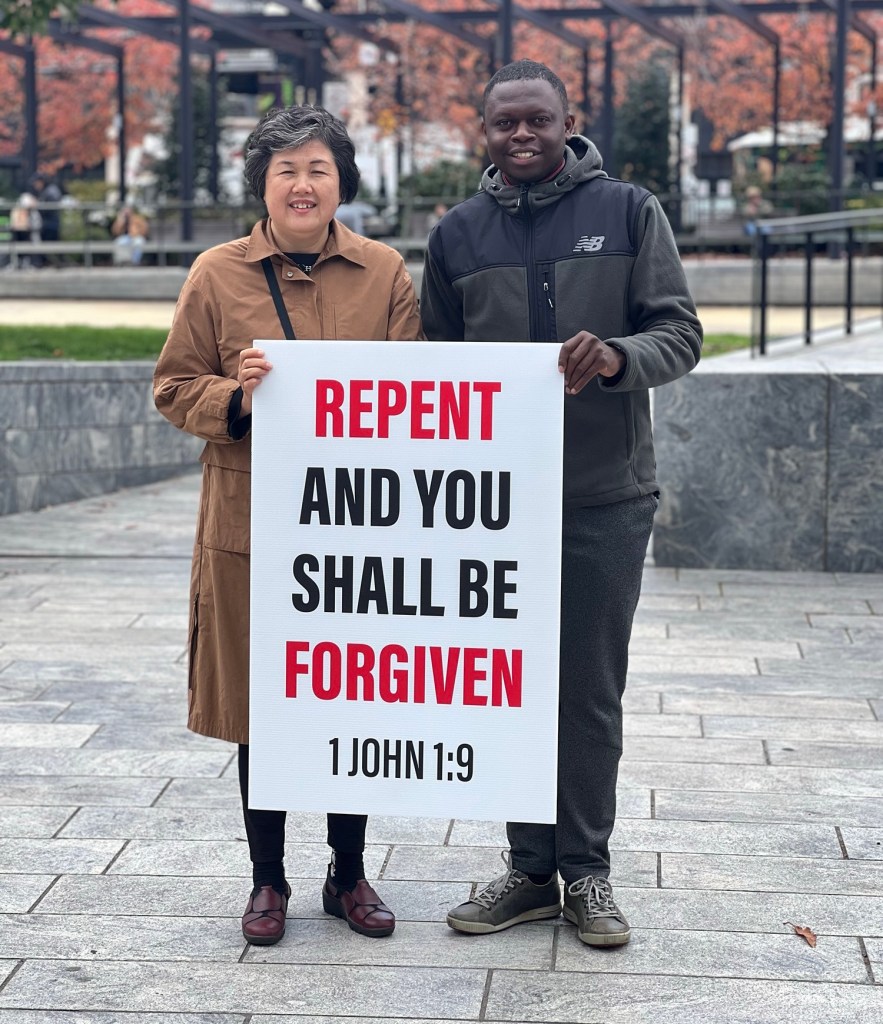
Pr. Judy Kang (left) and Evangelist Moses Mukitale on one of their mission trips in Boston, Massachusetts.
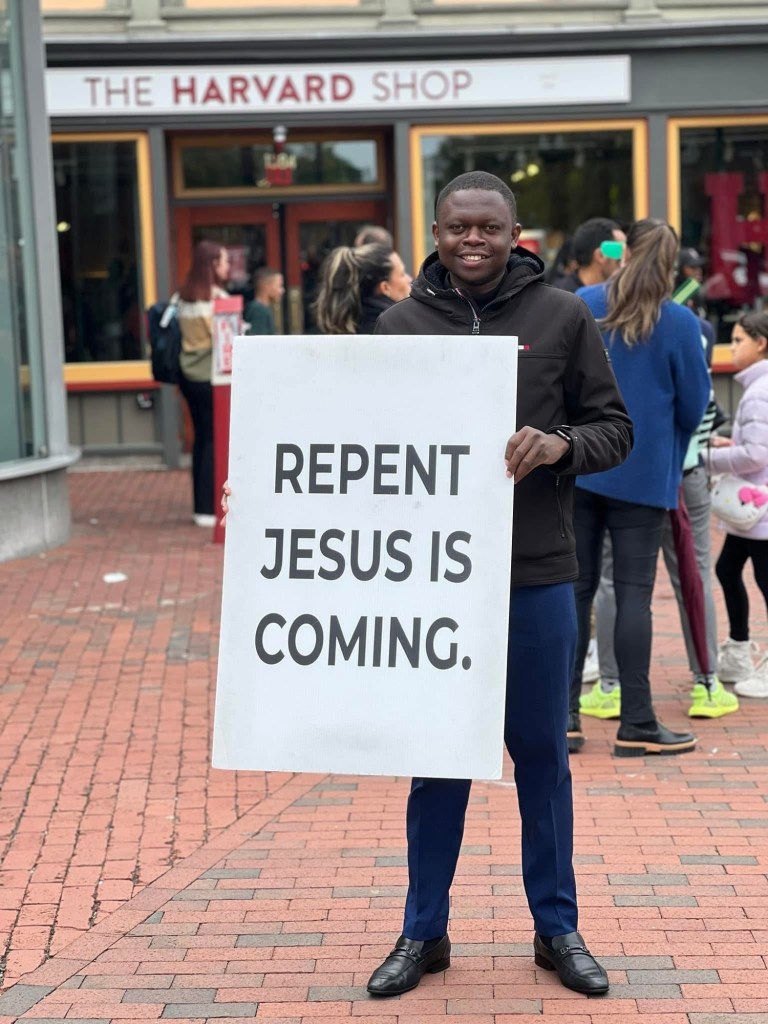
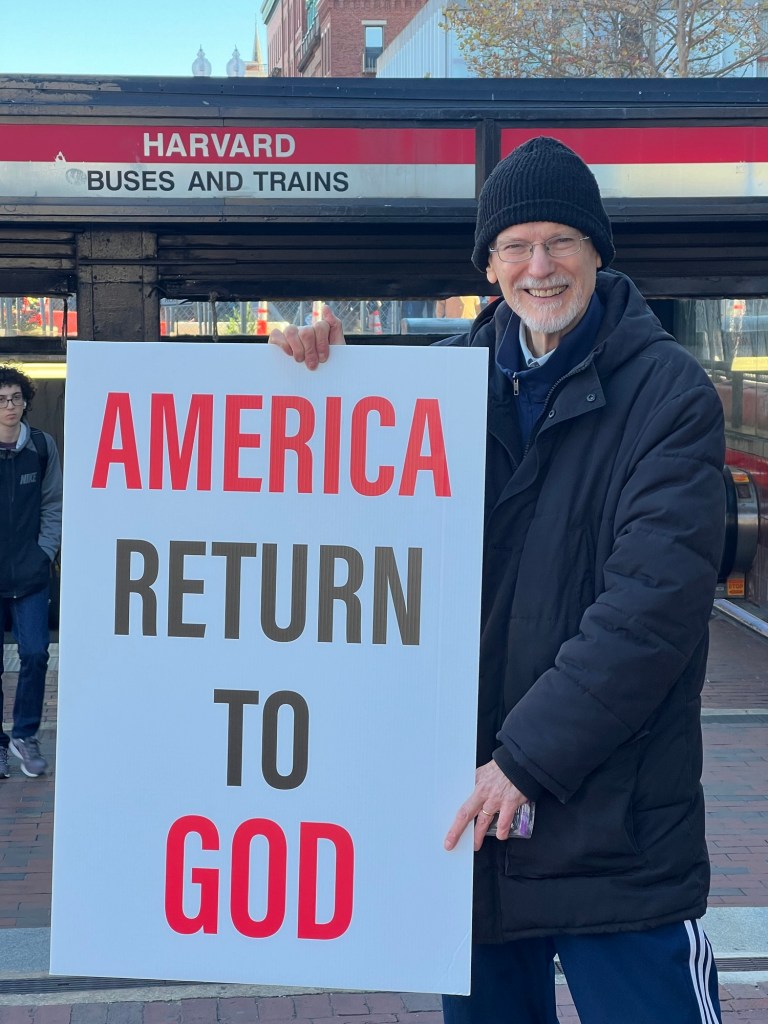
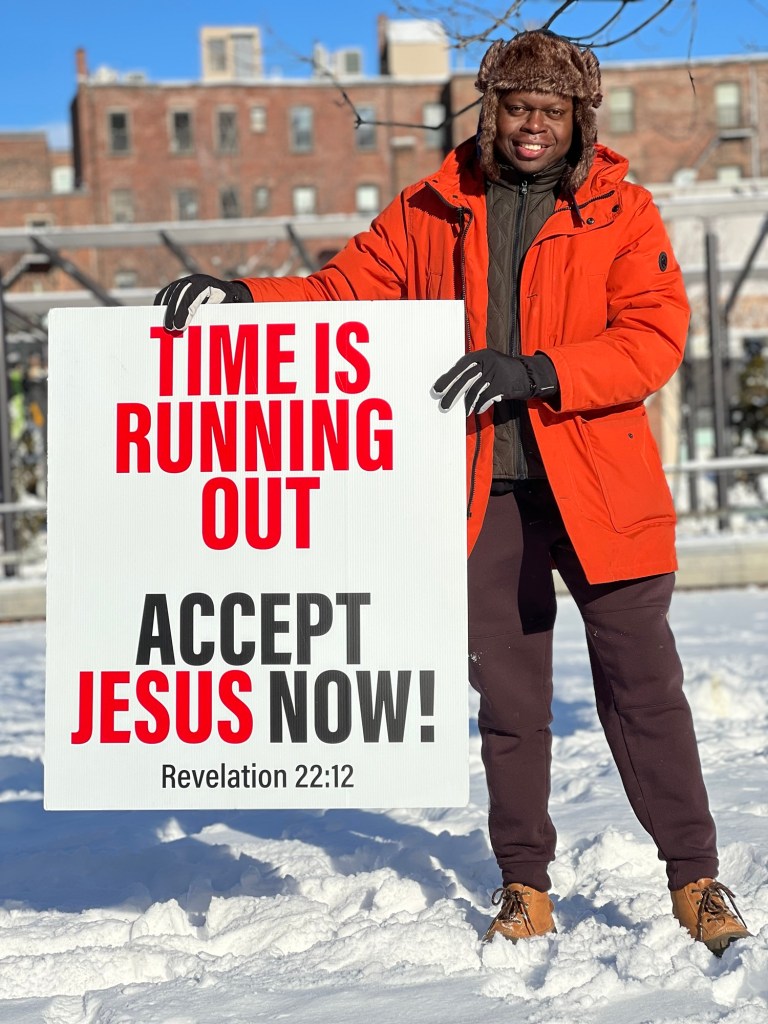
Moses Mukitale holding a gospel sign board at Harvard Square in Cambridge, Ma

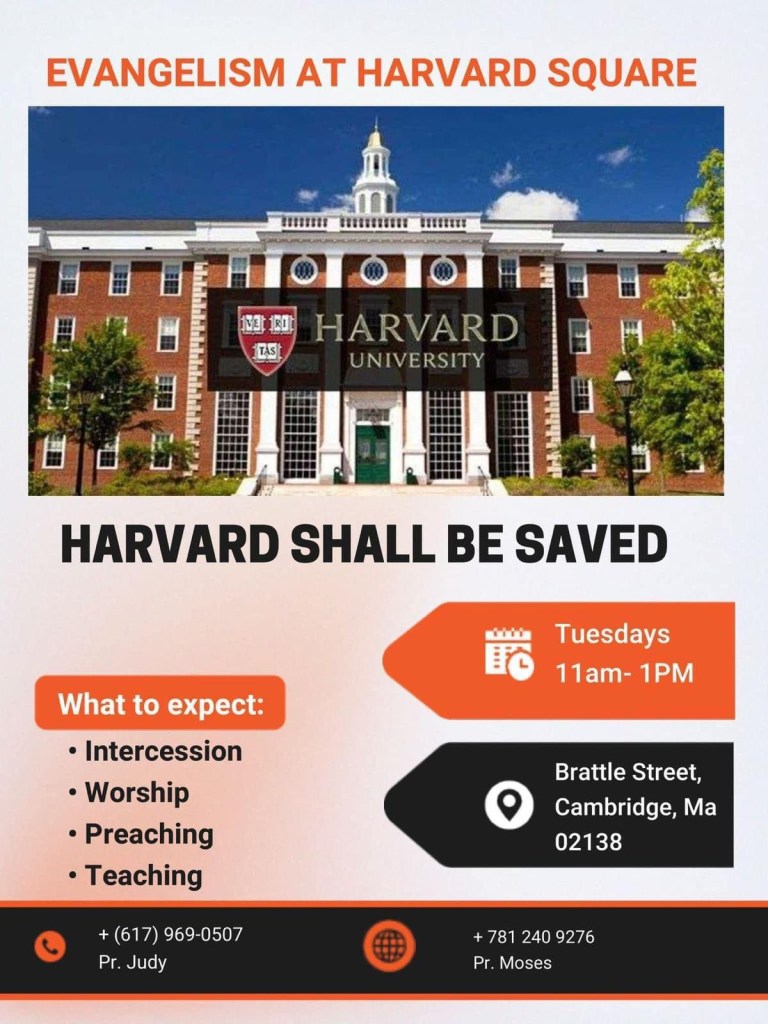
Every Tuesday from 11 a.m. to 1 p.m., the bustling streets of Harvard Square transform into a spiritual battleground as Evangelist Moses Mukitale and Pastor Judy Kang take their place to proclaim the gospel. Armed with faith, a passion for revival, and a heart for souls, the two ministers have committed themselves to seeing a spiritual awakening at Harvard University.

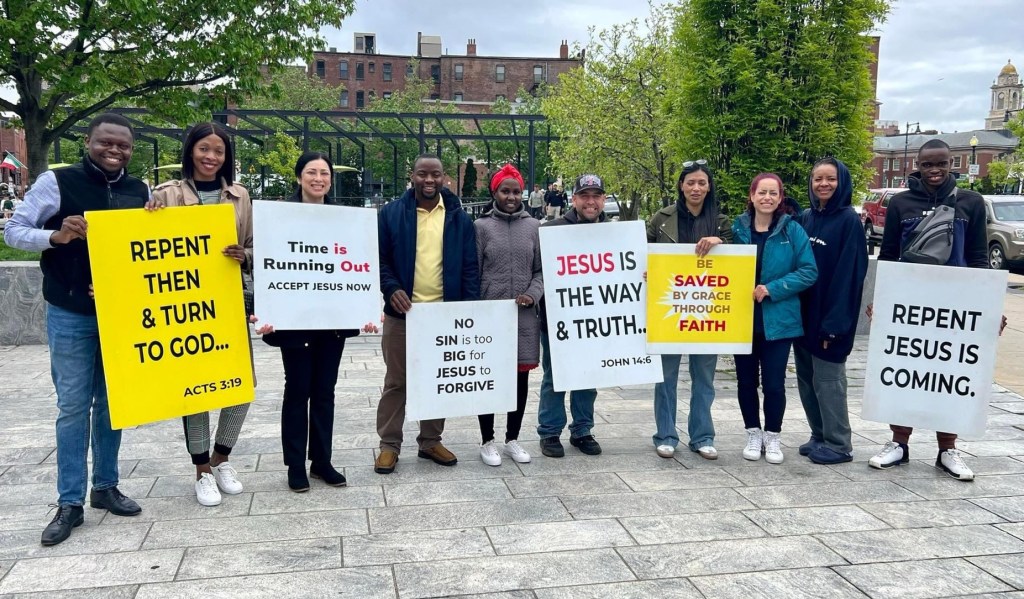
Ready to share the gospel at Harvard Square. Pr. Judy and Evangelist Moses are joined by others ministers every Tuesday to share the gospel at Harvard Square

Mukitale and Kang are not alone in this mission. They are often joined by a dedicated team of other ministers who hold banners, distribute gospel tracts, and engage passersby in conversations about Jesus. Each week, different speakers within the team take turns sharing the message of salvation, while Mukitale and Kang lead prayers for the sick, intercede for Harvard, and call people to repentance.

Pr. Judy (left), alongside minister Angelique (extreme right) doing one-on-one soul winning at Harvard Square

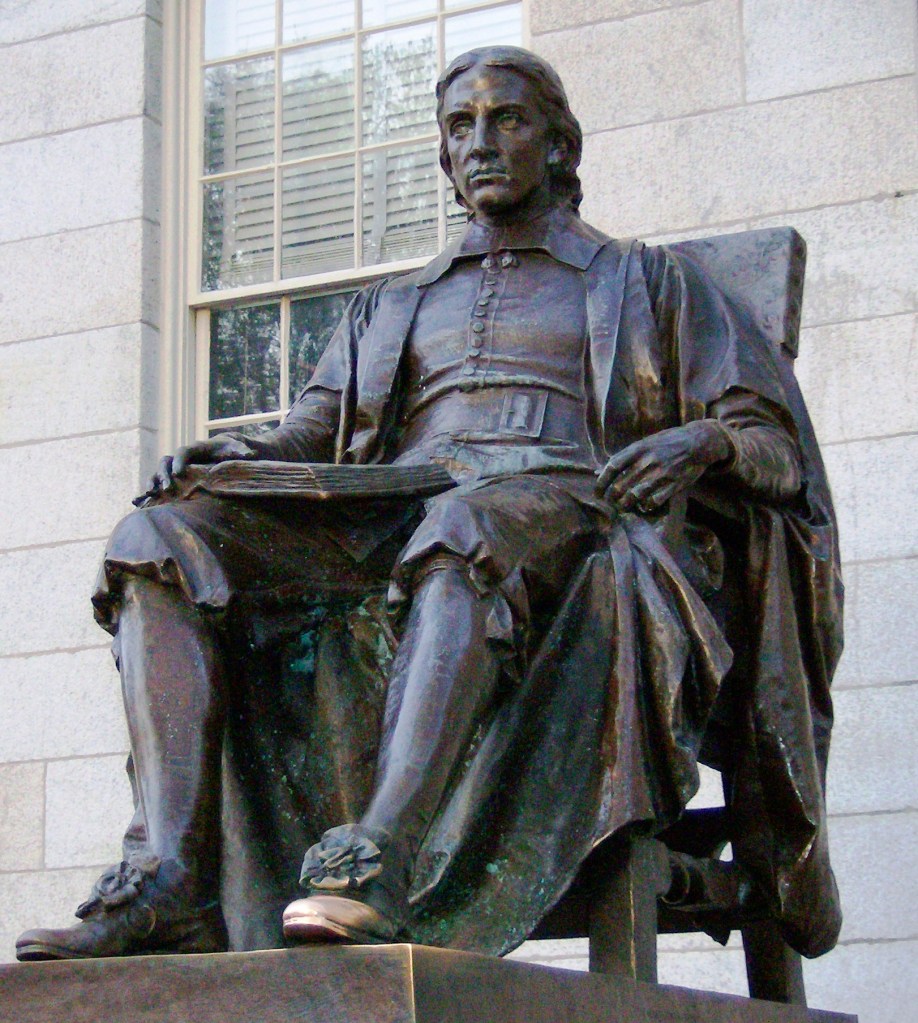
“We believe Harvard is not just a place of academic excellence but also a place where God wants to move mightily,” says Mukitale. “John Harvard was a Puritan minister who valued holiness and righteousness. We are standing here to continue that legacy, to remind Harvard of its spiritual foundation.”

Evangelist Moses interceding at Harvard Square

The duo sees their work as more than just street preaching; they consider it a divine assignment to reclaim one of the world’s most prestigious institutions for Christ. The weight of history and the influence of Harvard on global leadership only fuel their passion.

Pr. Judy sharing the gospel at Harvard Square
Elder Rick Paige sometimes joins the team to minister at Harvard Square

“We are here to be a light in the midst of intellectualism that sometimes forgets God,” says Pastor Judy Kang. “Revival is not just for churches; it is for universities, businesses, and every sphere of society. Harvard needs Jesus, and we will keep standing here until hearts are turned back to Him.”

Evangelist Moses (right) , during an outreach at the Harvard Square.
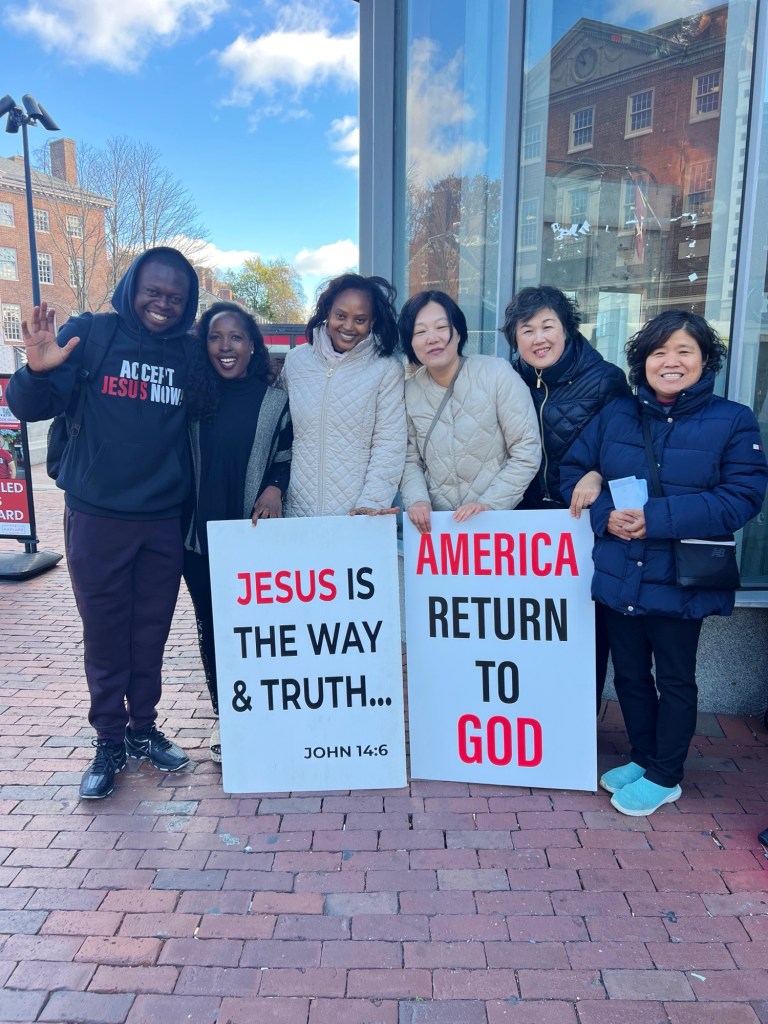
The team ministering at Harvard Square

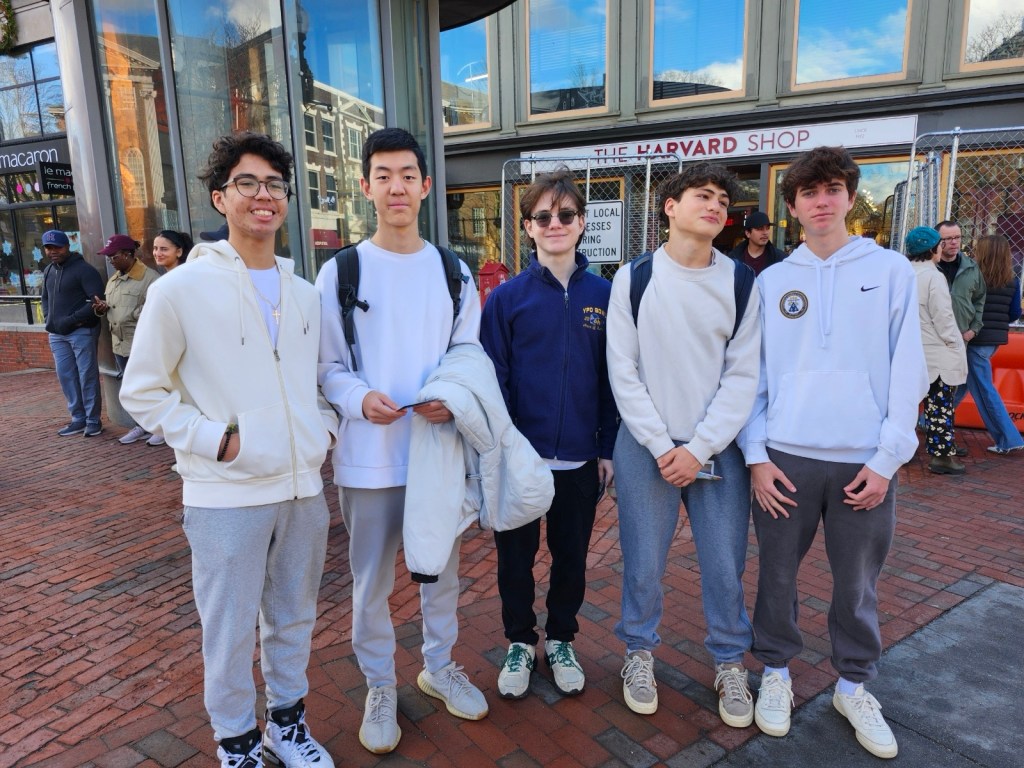
Despite the intellectual rigor of Harvard, their open-air ministry has not gone unnoticed. Some students and faculty members stop to listen, some engage in deep conversations, and others receive prayer. The presence of banners with scriptures and words of hope creates a striking contrast against the modern backdrop of Harvard Square.

Four members from this group accepted Jesus as their Lord and savior at Harvard Square.

“We don’t come here to argue,” Mukitale explains. “We come here to love, to share truth, and to be a voice crying out in the wilderness. Some people ignore us, some mock us, but many are genuinely searching for something greater.”

The team also dedicates time to intercession, praying fervently for the students, faculty, and administration of Harvard. Their prayer is that God would raise up bold believers within the university who will carry the torch of revival long after they are gone.

“Our hope is that a generation of Harvard students will rise up who love God and are not ashamed of the gospel,” says Pastor Judy. “This is bigger than us. It’s about eternity.”

The John Harvard statue at Harvard University

With unwavering faith, Mukitale, Kang, and their team remain steadfast in their mission, believing that what began as a small gathering in Harvard Square will one day spark a movement of revival across the university and beyond.

Moses Mukitale spreading the Gospel Across Boston, Urging Repentance and Faith in Christ

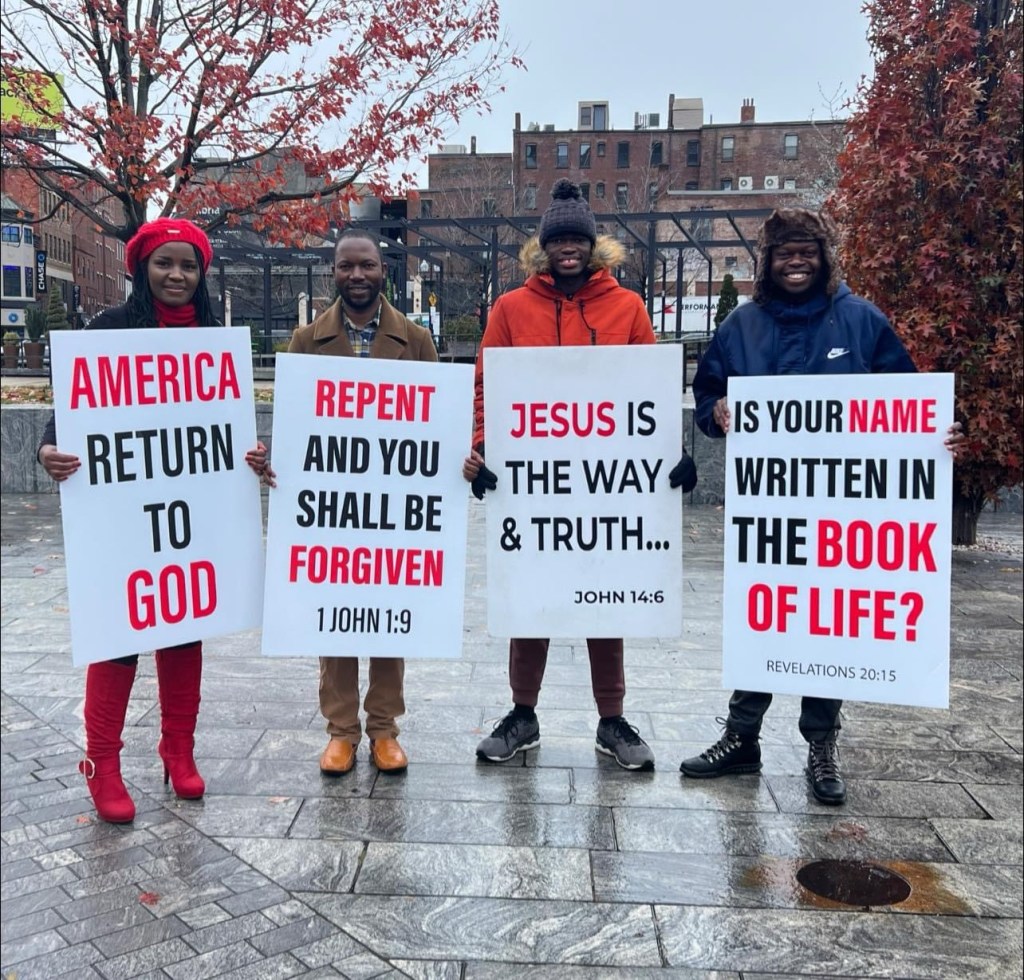
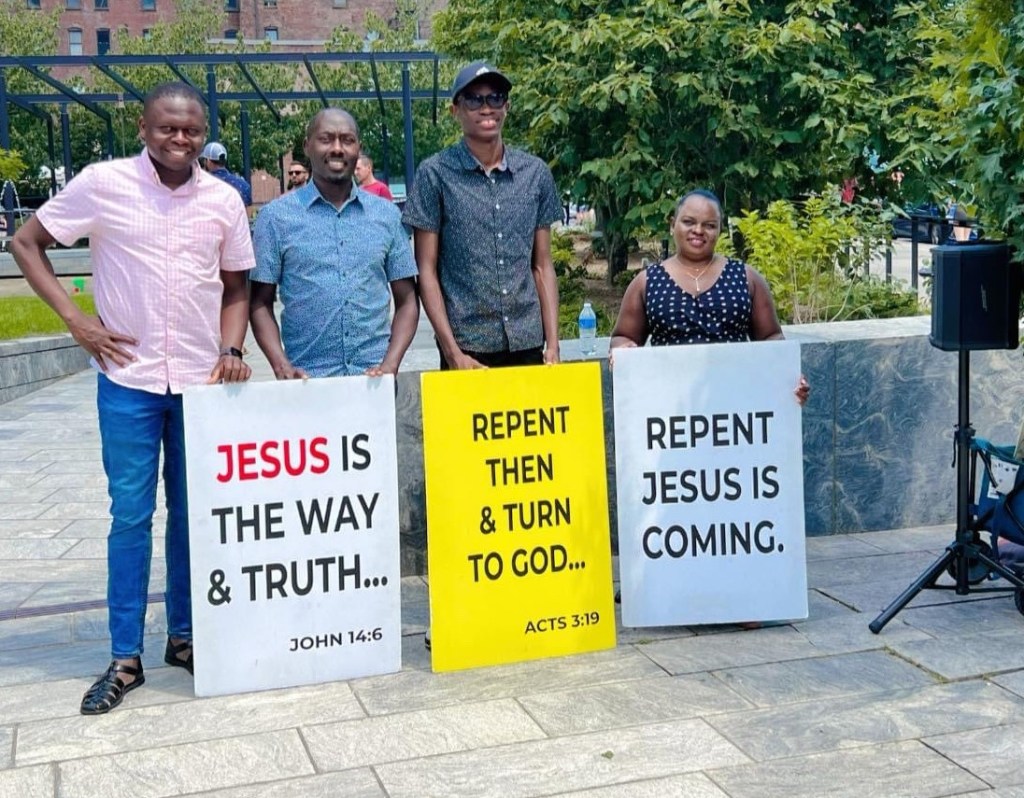
Moses Mukitale (first on the left) alongside his colleagues spreading the gospel in North End, Boston.

Boston, MA – In a time when faith seems to be wavering for many, one man is standing firm in his mission to spread the gospel of Jesus Christ. Evangelist Moses Mukitale, a passionate preacher living in Boston, Massachusetts, is doing everything possible to bring the message of salvation to the people of the city. Leading a dedicated team of believers, Mukitale preaches the gospel twice a week, urging people to accept Jesus Christ as their Lord and Savior and repent of their sins.

Evangelist Moses Mukitale holds a banner in North End, urging passersby to accept Jesus as their Lord and Savior.

A Mission Rooted in Faith

Originally from Uganda, Mukitale has always had a deep love for sharing the word of God. Since moving to the United States, he has embraced his calling with even greater determination. In a world filled with uncertainty, sin, and moral decay, he believes that the message of the gospel is more critical than ever.

Left to right: Moses, Christopher, Elijah, Immaculate, doing street evangelism downtown Boston

“Our world is broken, and many people are searching for hope in the wrong places,” Mukitale says. “But true hope, peace, and salvation can only be found in Jesus Christ. He is the way, the truth, and the life.”

Calling men to repentance in Boston, Ma

Mukitale and his team take to the streets of Boston twice a week, preaching boldly in parks, on sidewalks, and in busy public spaces. Their message is simple yet powerful: repent, turn away from sin, and surrender to Christ.

The Call to Repentance

Mukitale’s preaching emphasizes the urgency of repentance. He often references scriptures like Acts 3:19, which says, “Repent therefore, and be converted, that your sins may be blotted out, so that times of refreshing may come from the presence of the Lord.”

Moses (far right) with a group of ministers who spread the gospel at Harvard Square every Tuesday.

He warns that while God is loving and merciful, judgment is inevitable for those who reject His grace. “Many people think they have all the time in the world, but tomorrow is not promised,” he preaches. “Now is the time to accept Jesus, while there is still an opportunity.”

Mukitale is particularly concerned about the moral direction of society, where sin is increasingly normalized. He calls on people to reject sinful lifestyles and embrace righteousness through faith in Jesus Christ.

Overcoming Challenges in Evangelism

Preaching in a modern city like Boston is not without its challenges. Some people ignore or mock the message, while others openly resist it. But Mukitale and his team remain undeterred. “Jesus Himself faced opposition, and He told us we would too,” Mukitale explains. “But we will not stop preaching because the gospel is the power of God for salvation.”

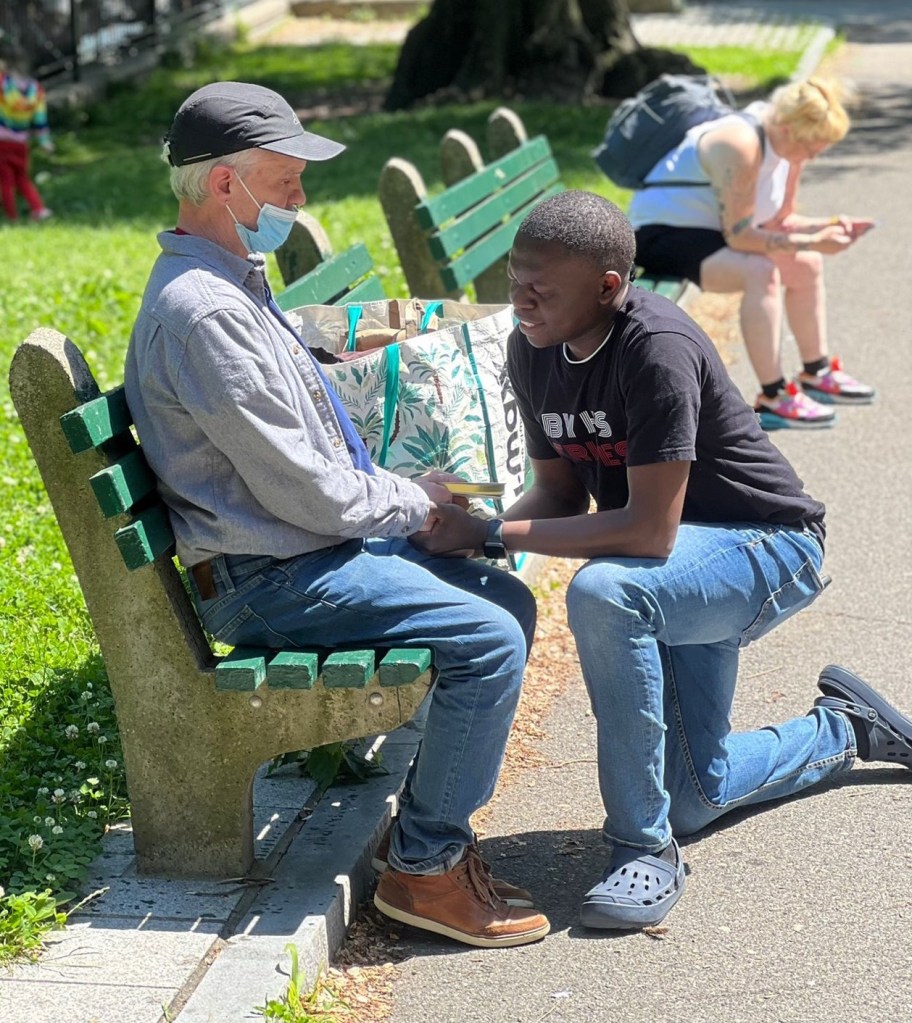
Moses praying for a man who accepted Jesus as his Lord and savior at the Boston Common grounds

Despite the challenges, there are moments of great joy—when people stop to listen, engage in conversations, and even surrender their lives to Christ on the spot. Mukitale recounts testimonies of individuals who were lost in addiction, depression, and hopelessness but found a new purpose after hearing the gospel.

Moses praying for a man in the North end, who was believing God for a breakthrough

A Call to the People of Boston

Mukitale urges the people of Boston to open their hearts to the gospel. He reminds them that Jesus Christ is the only way to eternal life, as stated in John 14:6, “I am the way, the truth, and the life. No one comes to the Father except through Me.”

“Jesus died for every single one of us,” he emphasizes. “No matter what you have done, His blood is enough to cleanse you. But you must make the decision to follow Him.”

Moses Praying for a man in need of healing for his back and knees at Boston Common.

Mukitale encourages those who have already accepted Christ to live boldly for their faith and to share the gospel with others. He believes revival is possible in Boston but that it will take the commitment of believers who are unashamed to proclaim the name of Jesus.

Spreading the gospel in Lowell, Ma. left- right (Pr. Florence, Min Brillian, Pr. Racheal)

Continuing the Mission

As Mukitale and his team continue their twice-weekly evangelistic outreach, they remain steadfast in their commitment to seeing lives transformed. Their mission is not about personal gain or recognition—it is about bringing people to the saving knowledge of Jesus Christ.

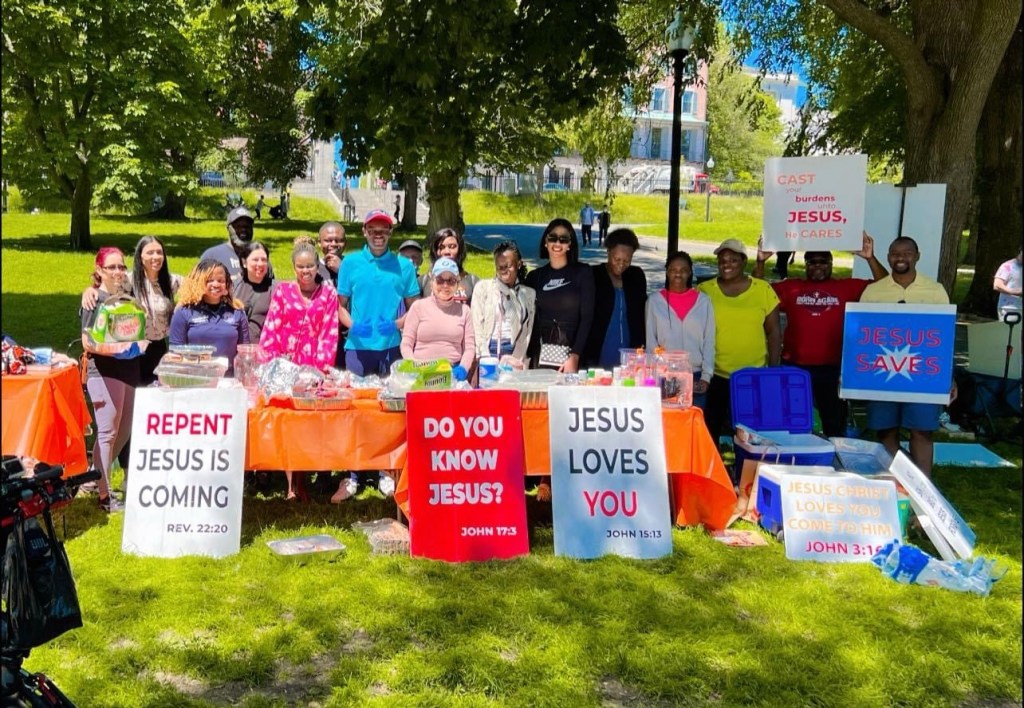
The team during a recent outreach event at Boston Common, preaching the gospel and providing food and essential items to the homeless.

“Our greatest desire is to see people set free from sin and walking in the light of Christ,” Mukitale says. “We will keep preaching, praying, and believing for a great harvest of souls.”

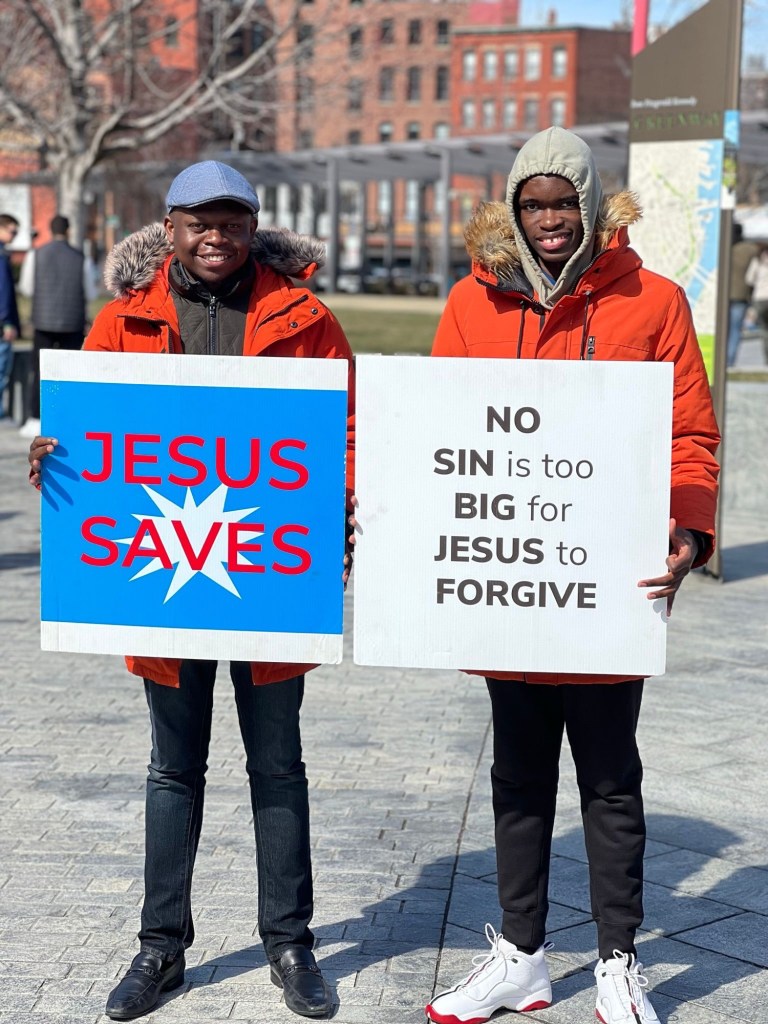
Moses and Elijah spreading the gospel downtown Boston.

For those seeking prayer, guidance, or more information, Mukitale welcomes them with open arms. “The door is always open. Jesus is waiting for you—come to Him today.”

Moses preaching the gospel at the Hay Market square, downtown Boston.

Conclusion

As darkness increases in the world, the light of the gospel must shine even brighter. Evangelist Moses Mukitale is a testament to the power of unwavering faith and obedience to God’s calling. His mission is clear: to call people to repentance, to proclaim salvation through Jesus Christ, and to remind Boston—and the world—that hope is found in the cross.

Featured

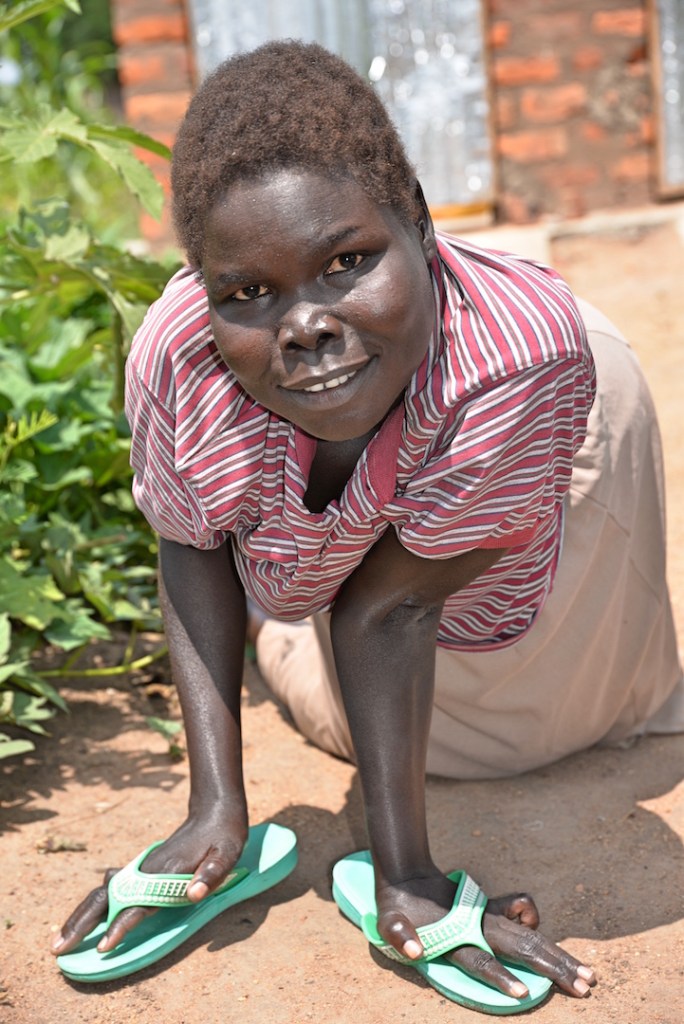
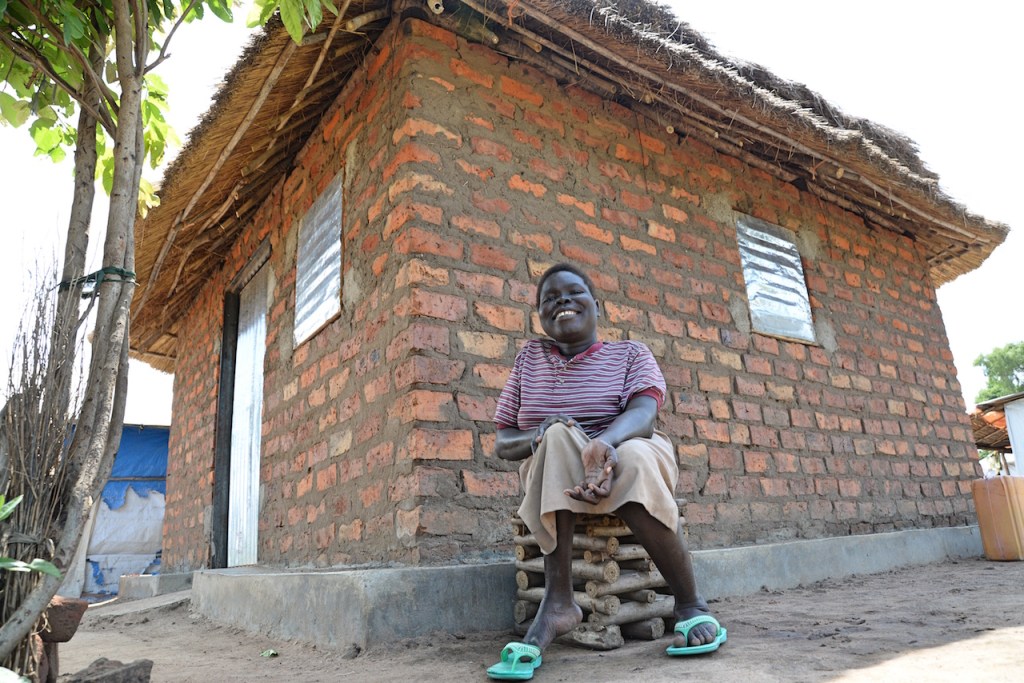
Disabled refugees receive decent shelters

https://www.wvi.org/uganda/article/disabled-refugees-receive-decent-shelters

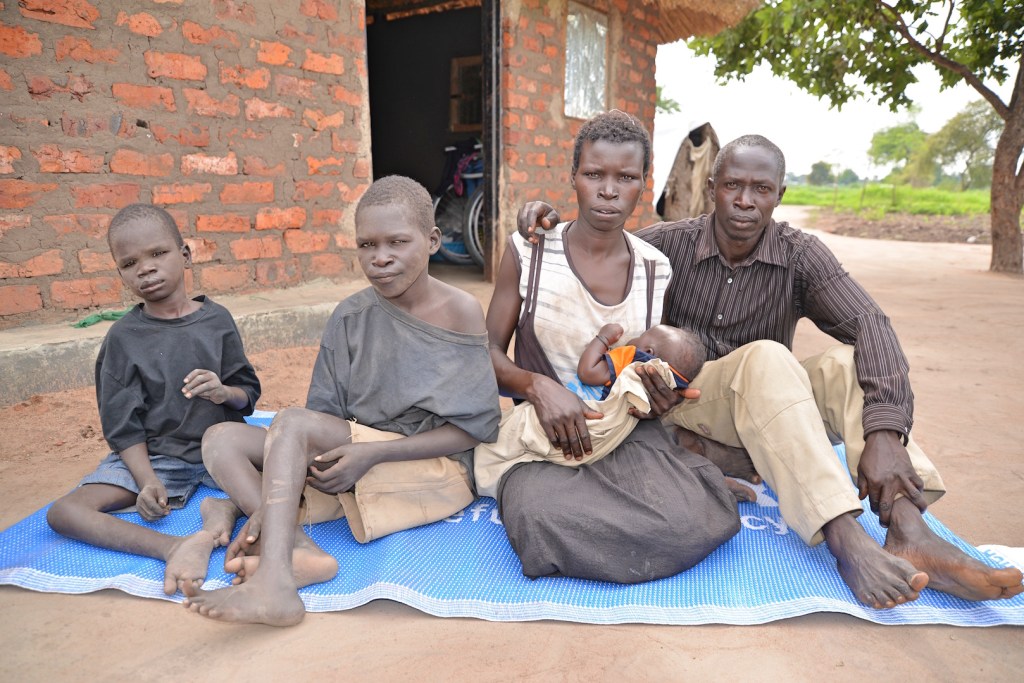
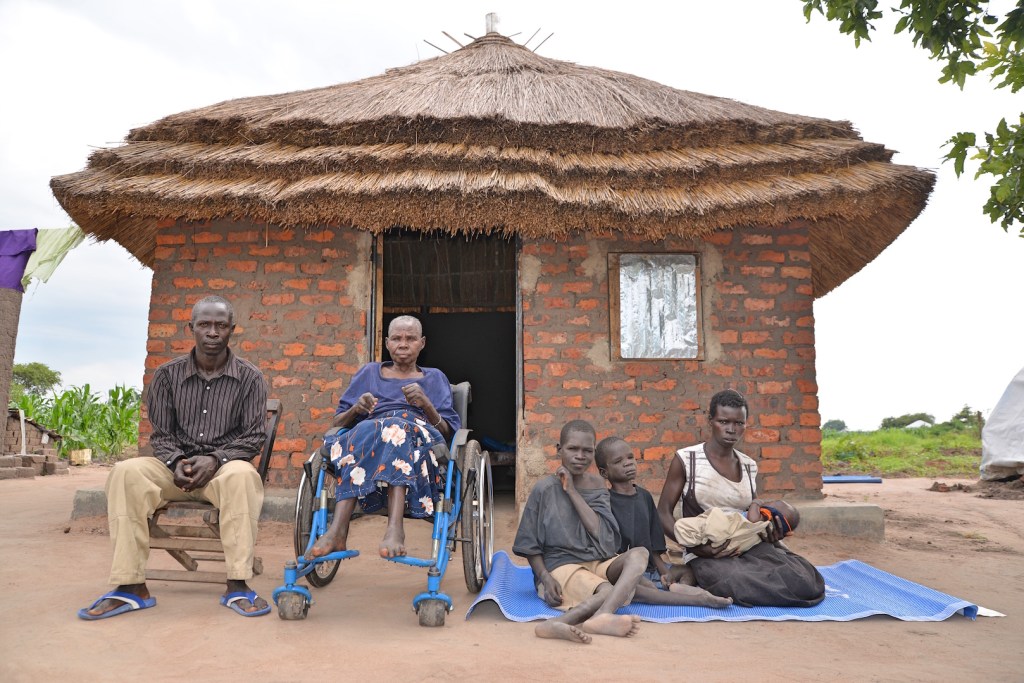
Ask me for a definition of a hero, and I’ll point you to 39-year-old David Koruk. I met this father of four recently in a refugee settlement in northern Uganda and he shared his harrowing tale of escaping gunfire to flee his homeland and protect his family. In November 2016, David’s home in Central Equatorial State in South Sudan witnessed heavy shelling, and David acted.

I crept out of the house, followed by my mum on her wheelchair and my two crippled nephews crawling on their hands. It was dark in the night. We moved quietly to a nearby trading centre as I sought for a motorbike rider to rush them towards Uganda. I succeeded in getting two bikes, one for my nephews and another for my mum. After seeing them off, I sneaked back to my house, fetched my three children and wife and we also fled for Uganda,” David narrates.

The family spent three days on the road, sleeping in open bushes and eating anything they found on the way. David’s children where seven, four and two years old, respectively, while his wife was six months pregnant. He was unsure of his mother’s and nephews’ whereabouts.

“My biggest worry during all that time was mainly my mother and two nephews. I was worried that they could be killed on the way. My mother cannot move, she has to be carried and assisted to go to toilet.” David explains. 

The family of eight was able to reunite at Palorinya refugee reception centre in northern Uganda and later resettled on a 30×30 metre plot of land. It was then that the grim reality hit David. Starting a new life in the middle of nowhere, with seven people to support, three of whom are disabled. Two months later a new member arrived, little baby Joy.

“The baby came at a very puzzling time. We had earlier received a small temporary plastic shelter but after four heavy downpours, the roof went off. All eight of us were sleeping in there. I then strategized and build a mud-walled straw house to accommodate my mother, nephews, and our three children. My wife, the new baby and I stayed in the plastic shelter to avoid overcrowding the other lot. Whenever it rained, we would get up and stand in one corner,” David adds.

But just as when David’s world all seemed to be crushing, lady luck knocked. 

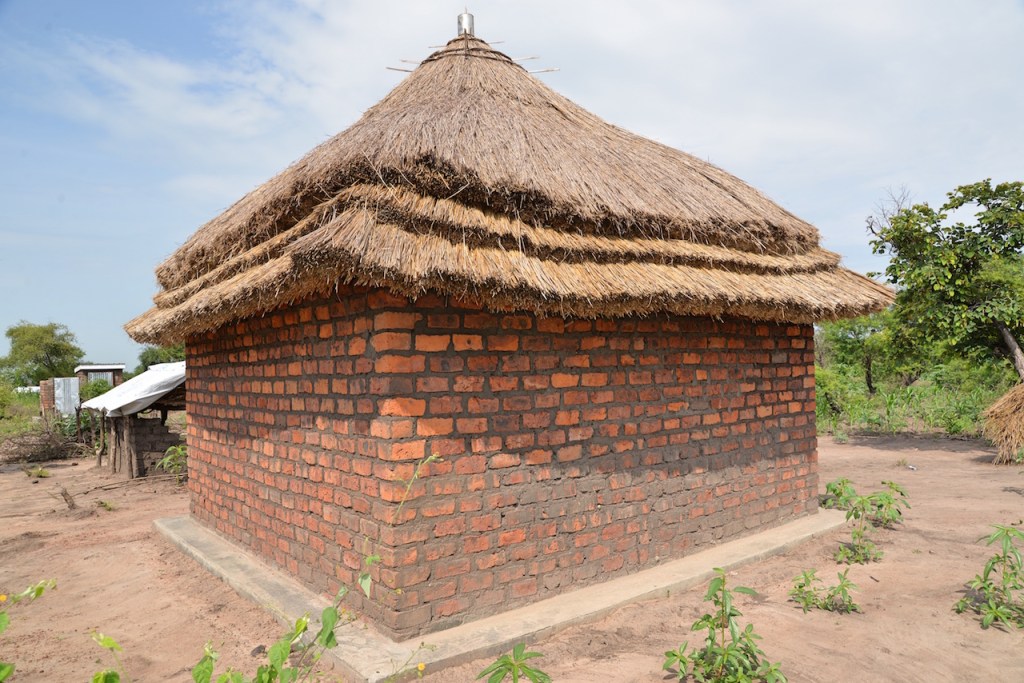
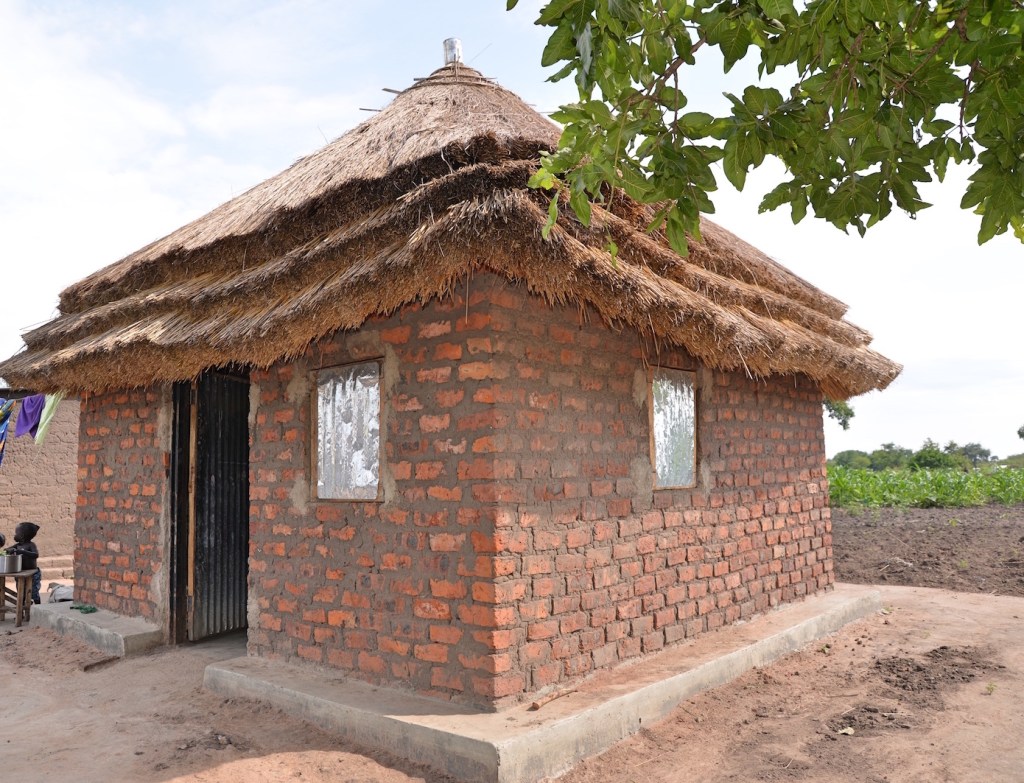
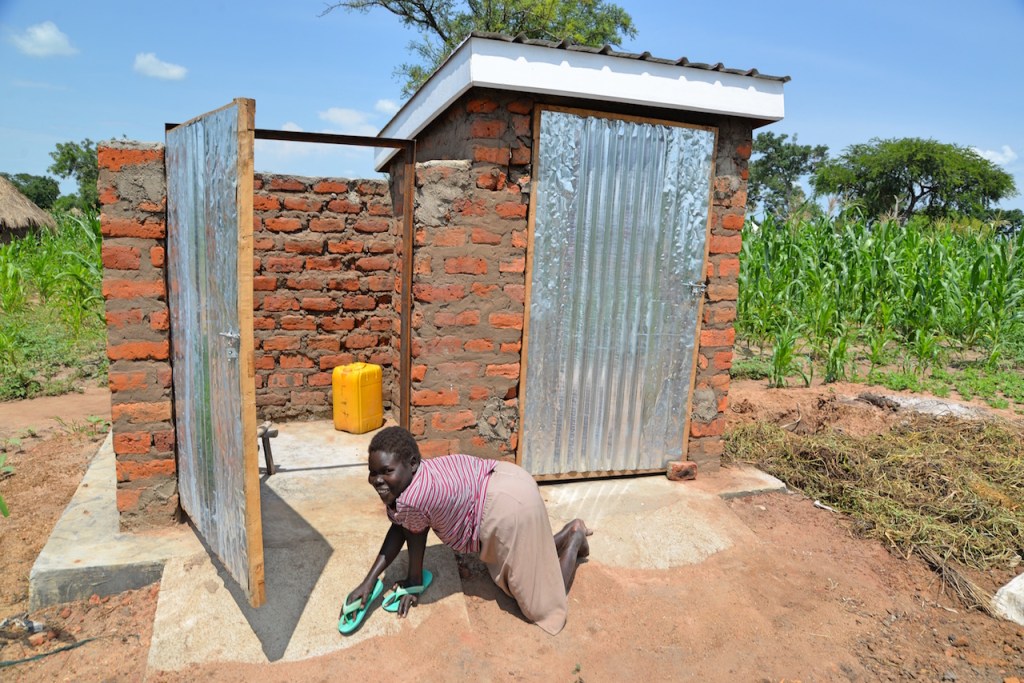
World Vision received funding from the government of Finland to, among other activities, construct 20 decent semi-permanent houses for vulnerable disabled refugee households like David’s family. Beneficiaries also received a latrine and bathroom. Today, David’s compound blooms with a brand new 16 square metre brick house, able to accommodate his family.

The house is made of clay bricks and soil motor with a cemented floor and straw roof. It has one wooden door and two windows.

“My mother is so happy with this new house and so are my two disabled nephews. My nephews are orphaned and I’ve been with them since they were little. This house is warm at night, cool during daytime and does not leak when it rains. The house also accommodates my three other children. Me, my wife and our last born are putting up in another mud walled house I put up,” a thrilled David narrates.

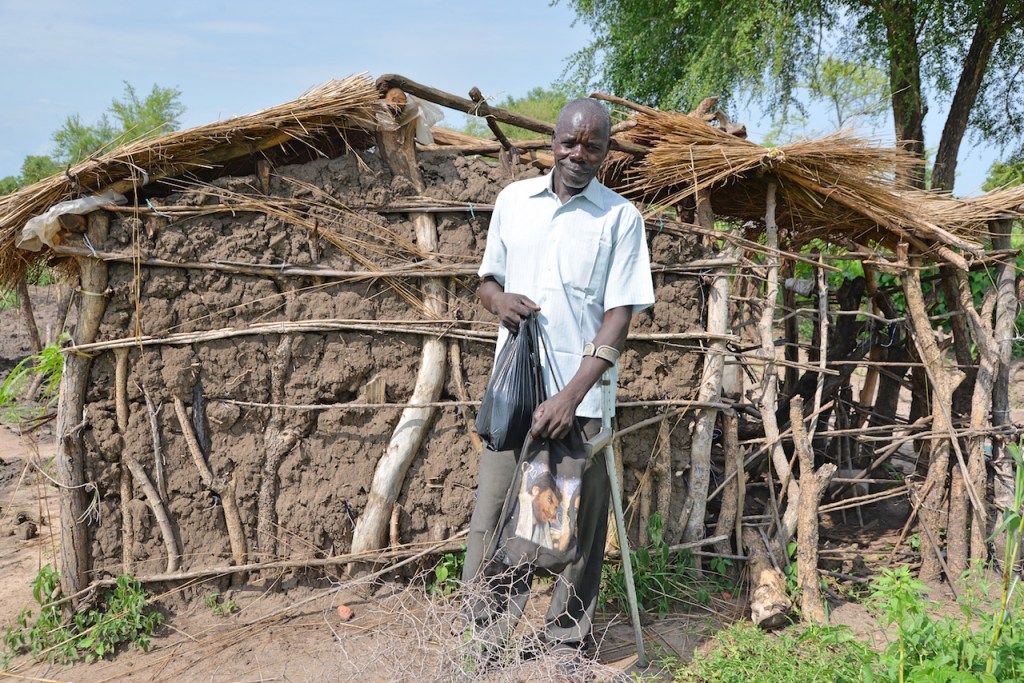
The situation before and after World Vision’s intervention. Majority of the refugees still live in houses made with plastic material 
Two other excited beneficiaries are also celebrating the arrival of a decent and spacious shelter. 29-year-old Jane Jaguru is lost of words. She’s no different to David’s nephews and mother. But with her new house, Jane is looking forward to napping like a baby again.

“My father died when I was very young. I grew up with only my mum and she’s the one I escaped with to Uganda. We’ve been staying in a plastic shelter since we got here. The plastic shelter is very uncomfortable, have no window and let in insects at night. During the daytime you could not rest in it due to the heat. But this new house is different. It’s very well ventilated, has a door and window, is easy to clean and is accessible for me. The bathroom and toilet are also easy for me to use since they have ramps,” Jane explains.

49-year-old Samuel Luwate is also happy with his new home. Unlike Jane, Luwate has no relative staying with him. He lost touch with his wife and three children when mayhem broke out back home. During the fracas, he sustained a severe compound fracture on his right leg, which later culminated into a physical disability. Fortunately, he’s still able to move on both legs, albeit with pain.

“The majority of the disabled people in South Sudan are abandoned by their family members when fighting breaks out. People look at us as a burden. And you can’t blame them because everyone is running at that point. The majority of the disabled people that remain behind often get killed. This kind of support is very crucial to us because we are in a new environment, away from our communities where everybody knew us and supported us,” Samuel explains.

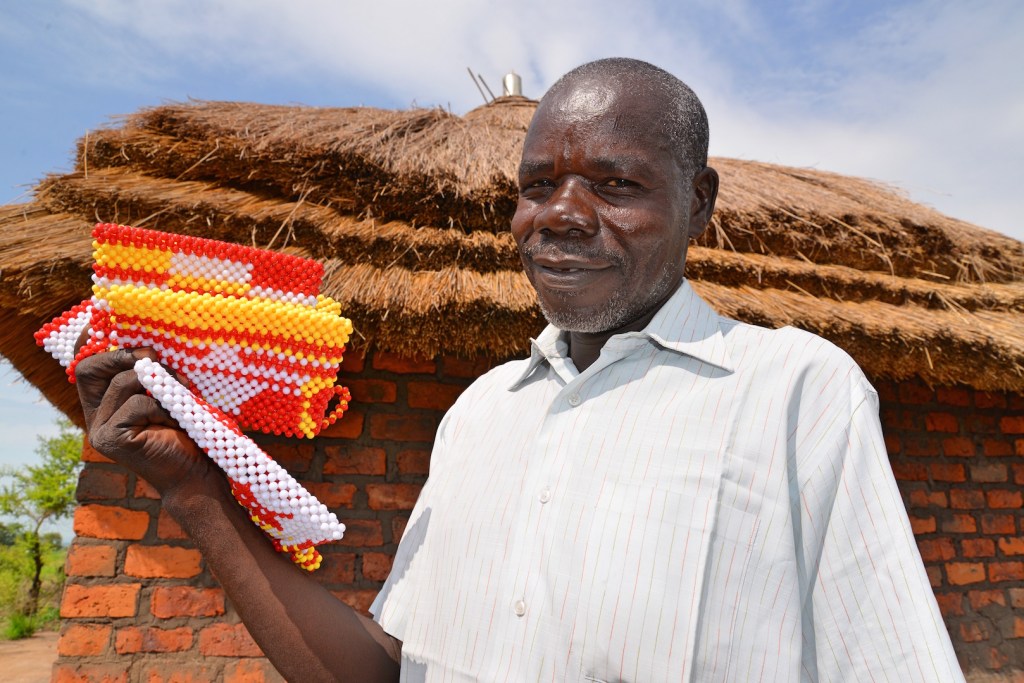
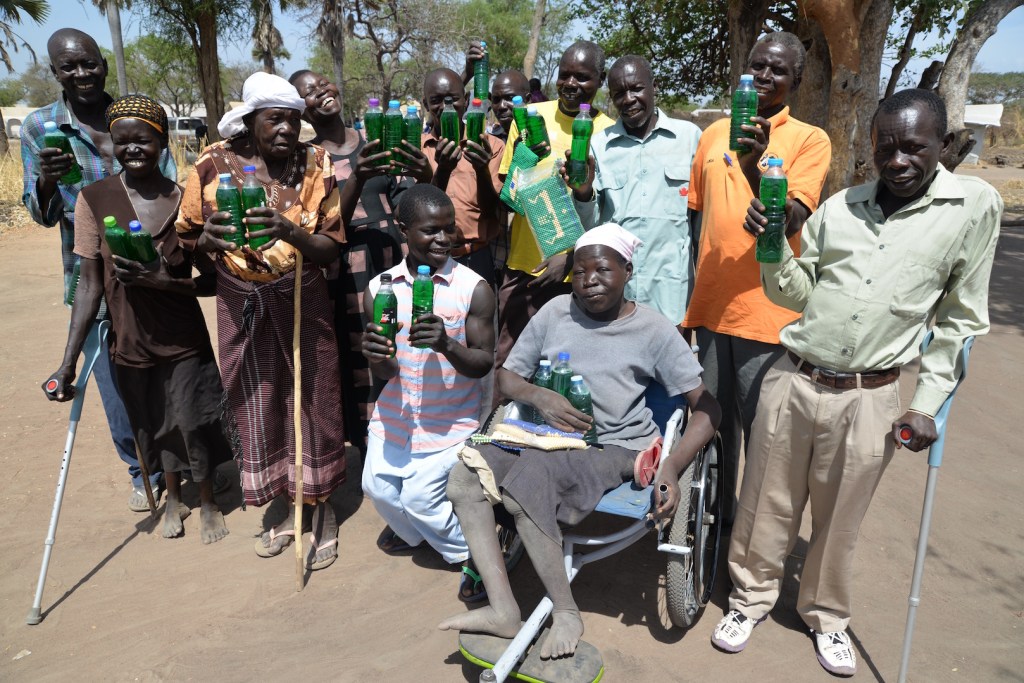
Samuel, Jane and numerous other disabled refugees at Palorinya have not only received shelters from World Vision. They’ve also been empowered with various life skills to boost their household incomes. As a result, they’ve formed enterprising groups comprising both of refugees and host community members. Lately they are producing liquid soap, beaded hand bags, craft sandals, bangles among other items.
Under World Vision’s renewed funding from the government of Finland, 35 more shelters for vulnerable disabled refugees are to be constructed at Palorinya refugee settlement in 2018. There will also be more life skills empowerment programs to support disabled persons with various skills for income generating activities.   

A Chicken-and-egg Solution

By Moses Mukitale, Communications Coordinator, West Nile Refugee Response, World Vision Uganda

https://www.worldvision.org.hk/en/news/ireports/chickens_eggs

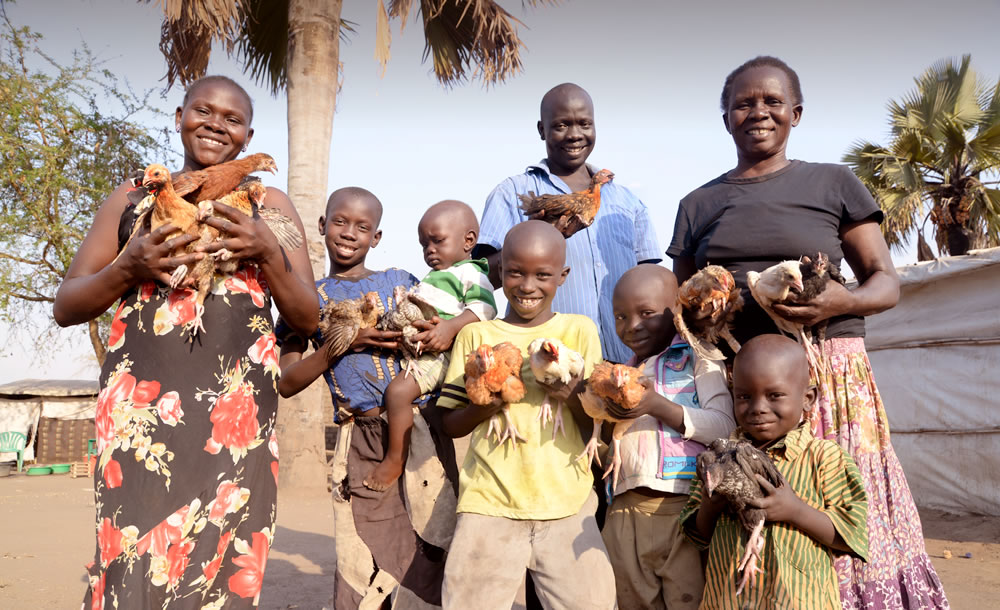
Harriet’s four young stars can finally dream of eating eggs again. The family of six just received 16 chickens from World Vision to start poultry farming. Ever since they fled South Sudan in December 2017 and settled at Palorinya refugee settlement in northern Uganda, Harriet’s four children have only eaten eggs twice.

And on each of those occasions, she had to sell part of the family’s monthly food rations to buy an egg for each child. For a family that previously owned hundreds of chickens back home, adapting to a life without eggs has not been easy.

“A tray of eggs here costs UGX10,000 (HKD$22) which I can’t raise. Back home we had over 400 chickens, it was possible for the children to eat eggs almost every other day. We would also eat chicken at least once every month. But ever since we got here, we’ve never tasted chicken.” Harriet narrates.

Currently the family relies solely on World Vision-distributed monthly food rations. Things would perhaps have been better had Harriet’s husband 39-year-old Alex not been hit by a stroke, which left his body partly paralysed.

Harriet too is partially disabled. She is yet to heal from a dislocation in her right hip bone which she sustained as the family fled South Sudan. She, just like her husband, is unable to engage in any kind of hard labour that could raise some income.

“My husband is weak. He just stays home. He only walks around our compound and that too makes him tired. So I have to take care of him plus the children,” Harriet adds.

But Harriet’s song is starting to change. Light is evidently getting clear even in the middle of her tunnel. Soon she will be able to have eggs for her children, plus some to sell and take care of her husband.

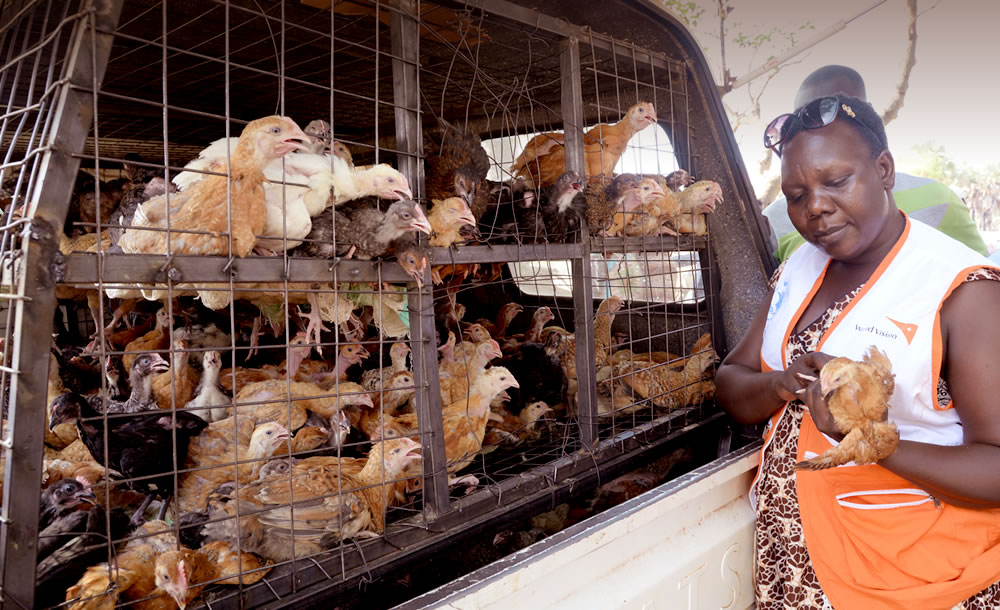
Her family is among the 66 vulnerable refugee households at Palorinya refugee settlement that have just received hybrid Kuroiler chickens from World Vision to start poultry farming. A total of 1000 birds have been distributed, benefiting over 250 children.

What are Kuroiler chickens?

Kuroiler is a hybrid breed of chicken developed in India, suitable for both meat and egg production. It is an economical breed that can live feeding on kitchen and agricultural waste. The bird is known for its tasty meat in addition to its productivity and ability to thrive in harsh environments.

Kuroilers produce about 150 eggs in a year, while the indigenous breeds can only produce about 40 in the same period. The maturity period for Kuroilers is about 10 weeks, much shorter than the local breeds that take several months. At maturity, Kuroilers weigh about 3.5kg, making them a better broiler compared to the local breeds that normally weigh 2 to 2.5kg.

What awaits Harriet?

In the next 10 weeks, Harriet’s Kuroilers will be fully grown, giving her an expected 50 eggs every month. This means each of her four children will be able to eat eggs each week. Extra eggs produced can be sold for income.

“The children are very excited; they are already giving names to each of the chickens. These 16 chickens will grow into many others. We were taking care of chickens back home so we know how to look after them,” adds Harriet.

“Each vulnerable household we selected has an average of four to five children so they will all benefit from the eggs and chicken. It will boost their nutrition and enable their parents to meet other needs at home,” says Livingstone, who oversees World Vision’s livelihood empowerment interventions at the settlement.
Livingstone adds that all beneficiaries have been trained in poultry rearing and management and also supported with chicken feeders, drinkers and start-up chicken feed. World Vision also ensured that each beneficiary constructs a coop for the chickens before taking them home.

For now, we can only hope the best for Harriet’s four wonderful children.


Published on 3 Apr 2018

Wheeling their way to success

By Moses Mukitale, Communication Coordinator, West Nile Refugee Response

Time check 7:30am. Thirty two-year-old Jurugo Chaplain and two others are already on the road, cruising their three-wheeler motorcycle towards Palorinya’s trading centre. They have a client waiting, the merchandise has to be transported to the market to get the best price.

This will be Chaplain’s first customer of the day. After this, more than 15 others are waiting.

The clients call him by phone and within just minutes, he will be there, ready to pounce for business. On market days like today, Chaplain often loses count of the number of clients he serves.

And you can’t blame him. There are not many plying this trade. A three wheeler like his costs UGX6.5Million (US $1,800). His is just one among the five provided freely by World Vision to refugee and host community youths in Palorinya settlement. This motorcycle aims to help kick-start income generating activities for refugee communities at Palorinya.

On a good market day, Chaplain will make close to UGX150,000 (US $41) while on normal days he fetches between UGX35000-UGX40000 (US $11) daily.

For refugees like him, this is more than enough to look after his family. But Chaplain is not alone on this three-wheeler. There are six others behind him. Once every month they meet to share their profits, service their tricycle and, sometimes, give out loans to members.

Getting the three-wheelers

With funding from the government of Finland, World Vision in October 2017 donated five three-wheeler motorcycles to five youth groups at Palorinya refugee settlement. The motorcycles are part of World Vision’s livelihood empowerment programme targeting both refugees and host communities.

Each group is made up of seven members comprising of people with disabilities and able bodied persons.

The donation followed a consultative meeting with the youth where they recommended three-wheeler motorcycles as their preferred donation for income generation.

Upon receiving the motorcycles, each group identified a member to ride theirs. This member is paid a salary for riding and operating the tricycle. Groups that had mainly persons with disabilities chose to hire an external rider. Each motorcycle has a maximum load capacity of 1000kgs.

Reaping the rewards

Five months down the road, each group has a success story to share. Members have taken loans and set up small grocery stores all around Palorinya, while others have been able to take their children to better schools outside the settlement. Chaplain himself got a loan of UGX400,000 (US $111) and set up a small grocery shop dealing in household items, soft drinks, snacks and other food stuffs. He saves roughly UGX250,000 (US $69) every month.

‘’I was a prominent businessman in South Sudan dealing in beer, soda and other soft drinks. I lost everything in the war. I only managed to pick a few plastic chairs. But with this humble beginning I am rising again. The tricycles have been of very great value to us. Of course they break down due to the nature of the roads here but we repair them. Those of us who are serious are going to benefit a lot,’’ Chaplain explains with a smile on his face.

Chaplain is planning to take another loan and set up a restaurant. He still wants to sell soda and soft drinks too. But that will wait for now.

The group’s secretary, 32-year-old Konyi Emmanuel, just took a loan of UGX350,000 (US $97) to take his three children to a better school in neighbouring Adjumani district.

‘’I have a sister staying in a refugee settlement near Adjumani district town. She found me a better primary school for my three children. They are now staying with her as they attend that school. It’s much better than studying from here. These tricycles are enabling some of us secure a better future for our children ‘’ explains Emmanuel Konyi.

Emmanuel, who is a PWD with only one hand, has plans of venturing into poultry keeping. He says that is something he would love to set up for his dear wife who is currently with him at Palorinya.

He says more youth groups need similar support to enable them earn some income.

‘’The majority of us lost everything we had. Hundreds of youth are loitering around the settlements doing nothing. If they are not engaged with such meaningful activities, they could end up being wasted,’’ Emmanuel adds.

 With more funding, World Vision hopes to support more youth’s groups in refugee communities with various income generating activities to boost their livelihoods.

He started a grocery shop with just $40

Kennedy Kemis is a member of a refugee savings group at Imvepi refugee camp in Arua district. Recently he got a loan of $40 from his savings group and used it to set up a small grocery shop at the camp. Our staff Moses Mukitale caught up with him. World Vision has supported refugees and host communities to jointly form savings groups in a bid to enable them access income. More than 60 groups have been formed, enabling members to borrow small loans and start up income generating activities

Refugee foster families, child headed households receive cash grants to improve living conditions and start up small businesses.

By Moses Mukitale

By Moses Mukitale, Communication Coordinator, West Nile Refugee Response

Dream businesses are soon to be reality for hundreds of refugee families taking care of foster children.

In December, 463 refugee foster homes and child-headed households living in Imvepi settlement received start-up capital to set up an income generating activity of their choice.

This follows a one-off cash grant of USD$235 that has been given to selected vulnerable refugee households to improve living conditions and boost household incomes.

‘’This is my answered prayer. I’ve been wanting to set up a small business since I got here. People who have some capital have already managed to set up small income generating activities,” said 62-year-old Yavu Victoria, a foster mother of four.

The cash grants, provided by World Vision with funding from UNHCR, were distributed in two instalments; USD$100 for a family to acquire desired household items and USD$135 as capital to set up an income generating activity.

Prior to receiving the cash, beneficiaries were trained in enterprise selection and business management for better utilization of the fund. Yavu Victoria said the cash grant will allow her to open up a vegetable grocery on her 30×30 metre plot of land. She has already identified a dealer who will supply her weekly with vegetables.

52-year old Besta Awadiya, a foster mother of 21 separated children was reeling with joy about the prospect of running her own business. Besta planned to deal in snacks and household items.

‘’I have five biological children, plus eight belonging to my brother who is caught up in South Sudan. In addition to these am also taking care of 11 unaccompanied children, who don’t know where their parents are. These children love staying with me because we speak the same tribe and they feel at home’’ Besta stated.

She will set up a grocery stall by the roadside.

62-year-old Bethuel Minga is taking care of 14 children, 10 are his biological and four are from a relative who could not make it to Uganda.

Bethuel, a former farmer in South Sudan plans to rent some farming land from host community and open up a big commercial garden.

‘’I’ve already found the land I want to rent for at least three years. I want to grow maize, vegetables, and sweet potatoes. I can see there is a ready market for food and fresh vegetable around here.  If am not able to sell the items at the refugee market, I will transport it to Yumbe and Arua markets’’ said the joyful 62-year-old.

There are currently 1,331 unaccompanied/ separated refugee children placed under foster care arrangement in 472 foster homes at Imvepi refugee settlement. World Vision case workers are also closely monitoring 64 child-headed households in Imvepi.

Decisions made for cash grant beneficiaries were made on the number of children fostered, families with more than four foster children in their care were prioritised. 

“The grant is benefiting both the fostered and biological children in each home.

We also had special consideration for foster homes headed by refugee mothers Plus homes with extremely vulnerable individuals like child mothers, child headed households, sick children, children abused on the way. We are going to monitor each of these homes to make sure they start up income generating activities and that they buy basic needs for especially for the children’’ said Evelyn Atim, World Vision’s child protection coordinator at Imvepi.

World Vision is also doing monthly cash distribution for over 6,000 refugees at Rhino camp and 4000 other refugees in Koboko district. This in partnership with the World Food Program (WFP).

Head over Hooves: refugee families welcome new “kids” into their homes

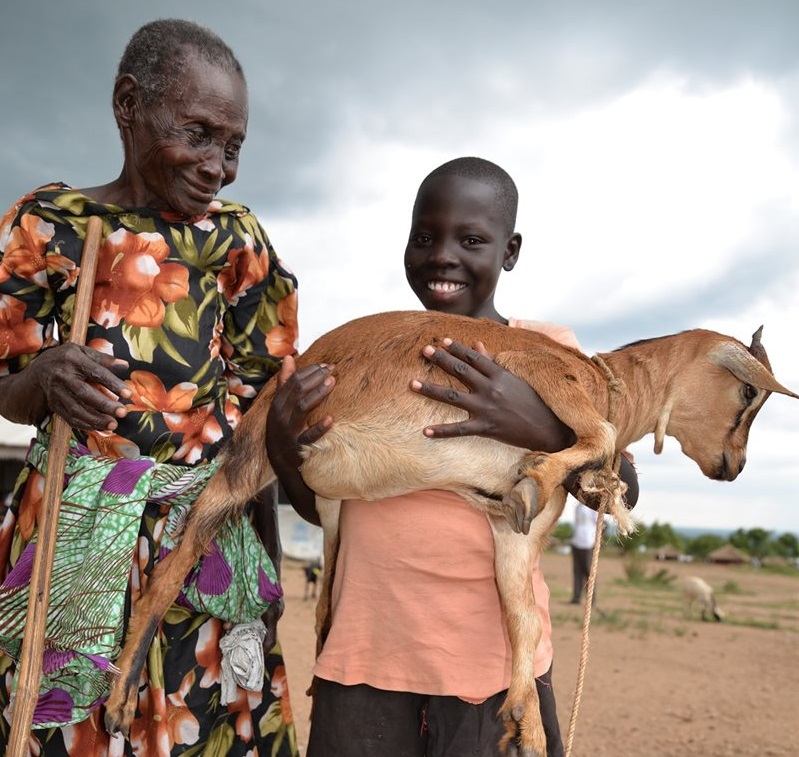
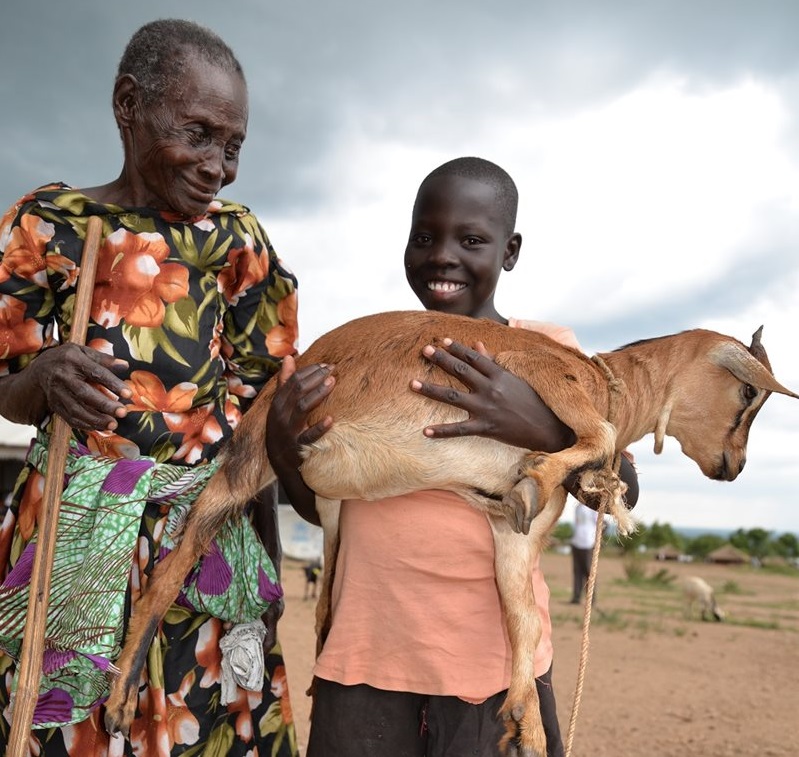
Amelia and her 10-year-old granddaughter, Susan, eagerly await the arrival of their two new family members. They aren’t alone: dozens of families are here today, all equally excited for the delivery of kids (baby goats) from World Vision’s Gift Catalogue. 

“We’ve been waiting and imagining how the goats will look. Finally, they are here. It’s good they’ve come in a rainy season when the grass is young and tender,” remarks Amelia.

Several months ago, violent attacks broke out in South Sudan, forcing separation between Susan and her parents. Terrified, Susan hid with her grandmother before fleeing to Northern Uganda for safety. It’s been a year now, and they still haven’t heard from their family back home.

Scenes from Imvepi refugee reception center in Arua district, northern Uganda. Photo: Theodore Sam

Many of the families lining up to receive goats have faced painful circumstances and are seeking refuge in Northern Uganda. 

But today, a truck overflowing with happy goats awaits them. About 250 goats are about to be distributed – a pair for each refugee family in need. 

The first batch of 250 goats loaded in a truck at Imvepi refugee settlement. Did you know that goats love being together in confined spaces? Photo: Moses Mukitale

More goats will arrive in the days to come, with many benefiting elders, foster parents, child-headed households and people with disabilities. 

As Susan and Amelia finally reach the front of the long line, World Vision staff encourage the young girl to pick out two goats. Susan looks at the herd for a moment, then gestures toward two brown ones. She likes the colour – her grandmother nods in approval.

She picks one up, then the other, embracing them tenderly. It’s clear they will all be friends. For a girl of her age who doesn’t have siblings play with, these goats are more than just livestock to her.

“I will play with them whenever I come back from school,” says Susan, brimming with joy. “I will also be taking them to eat and bring them water to drink.”

But these goats go beyond companionship. Many of them will provide a sustainable source of income and nutrition, if the family decides to breed and sell the animals or their milk. 

As part of the preparation the goat owners receive, Amelia and Susan were trained on how to feed and look after them. “These goats don’t require [much] energy. They will feed on their own,” Amelia explains. “They’re a very big liberation for us.”

80-year-old Amelia and her granddaughter Susan, 10. The two received goats at Imvepi refugee settlement in Northern Uganda. The goats were purchased through the World Vision Gift Catalogue. Photo: Moses Mukitale

Through the World Vision Gift Catalogue, goats and other animals are part of a broader community development plan. Animals are purchased locally and distributed to families in need along with feed, training and other support. These animals mean big changes for families like Amelia’s. This Christmas, give love to the world with meaningful gifts.​

Written by Moses Mukitale, Communication Officer, World Vision West Nile Refugee Response, South Sudan
Edited by Leanna Parekh, Writer with World Vision Canada

Empowering refugees to produce their own food

https://www.wvi.org/uganda/article/empowering-refugees-produce-their-own-food

By Moses Mukitale, Communication Coordinator, West Nile Refugee Response

In the last year, more proverbial rocks have been hurled at 18-year-old Betty than she could have ever imagined.

Her home was attacked, her mother abandoned their family and she fled her country. She arrived in northern Uganda with her three younger siblings in March 2017.

Life hasn’t been easy. While Betty has been able to enrol in school, she’s also been tasked with cooking and cleaning, washing clothes and fetching water. There is never a moment to be idle and rest, always more to do.

Here, like the thousands of other refugees, Betty’s family has relied on food rations: bags of hard beans, corn soya blend, a small quantity of salt and a bit of oil. The ingredient make the same meal day in and day out, no variation.

Betty’s father has also accompanied the family, but his focus is on finding an odd job to bring in a bit of money for the family. He’s often not successful. Instead, Betty’s family often sell off part of their food ration – leaving them eating just one meal per day.

It’s hardly the life an 18-year-old dreams of – or that encourage the healthy development of her 4 year old brother, 8 year old brother  and 10 year old sister .

Sadly, the challenges Betty’s family experiences are far from isolated.

The majority of South Sudanese refugees in Imvepi settlement – where Betty’s family lives – are unemployed. A May 2017 inter-agency livelihoods assessment report conducted by World Vision, UNHCR and Caritas International, found that 58% of refugees at Imvepi settlement were not engaged in any form of economic activity and relied entirely on food assistance for survival.

To ensure families have more diverse diets and more food, World Vision has distributed a variety of high-yielding, drought resistant seeds to refuge families, thanks to support from UNHCR.

More than 3,000 refugees and host community members at Imvepi refugee settlement have been provided maize, cabbages, okra, beans, sorghum, cassava, tomatoes, onions, and sesame seeds in the months of August and September 2017.

Betty’s family is among the recipients.

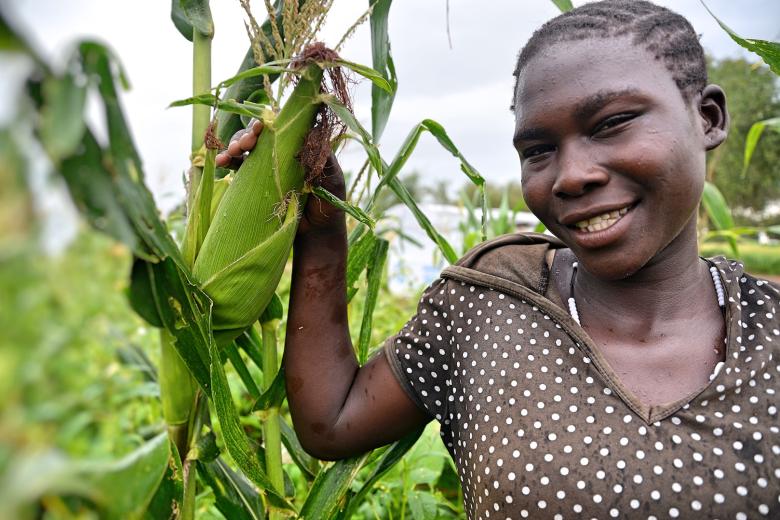
A visit to Betty’s plot clearly demonstrates that the seeds were put to good use. The maize is almost ready for harvest, while some of the Okra is already being eaten. Betty says the crops have given them more food to eat and that the family is now able to have 3 meals a day.

“My siblings and I love Okra. And we grew a lot of it in our plot. Sometimes we do not eat beans at all for close to 3 days. This is because of the availability of okra. We have not yet harvested the maize but I am sure we shall be able to sell some of it and use the money to buy basic household needs. As you can see, our entire plot of land is already full with the crops. The 50×50 meters is too small” Betty says.

Silas Simbe is another one of the refugees benefiting from the seeds.

The 48-year-old father of 10 decided to rent farm land from host community in order to have more produce.

Silas, a former coffee farmer in South Sudan says he rents one acre of land per farming season at UGX10,000 (USD$3). A farming season normally stretches for three to five months, depending on the crops one has grown.

‘’The free land we are being given is not enough for someone to carry out commercial farming. You can only grow crops for domestic use. But there is available land for hire from host communities if one has money. Currently am renting one acre for one season. Each acre is at UGX 10,000 I have planted maize, beans, simsim, ground nuts and now am going to add cassava,’’ explains the 48-year-old.

When crops are harvested, they will provide Silas’ family with enough income to supply for their needs.

Providing seeds to refugees is a sustainable solution for food security, says World Vision’s resilience and livelihoods officer in the West Nile region Victor Ajuma.

Ajuma adds it is very important for refugees to produce their own food given the constant funding shortfalls for food rations.

“We cannot guarantee that the monthly food rations will be constant all the time. That is why we want to empower refugee communities to produce their own food and also make sure their household incomes are boosted. Beyond providing these seeds, we have also given youths groups some ox ploughs and oxen to enable them clear their farm lands” explains Victor. 

World Vision is also offering agricultural extension trainings to various youth’s groups at Imvepi refugee settlement. Plans are underway to extend the programme to the newly opened Omugo refugee settlement

These refugee entrepreneurs are creating their own opportunities, thanks to a little help

Refugees who arrived in Uganda with just the clothes on their backs a year ago are now running thriving small businesses. 

Mini groceries, barbershops and pharmacies have popped up in recent months in Imvepi refugee settlement – helping families support themselves and contributing to an emerging local economy. The start-up businesses were established thanks to start-up capital that was provided from UNHCR in December 2017. World Vision partnered with the UNHCR to distribute the cash grants worth US $235 to 463 vulnerable refugee households – refugee foster home or child-headed households. Here are a few of the success stories:  

Isaac Gift Joseph, 22 years old

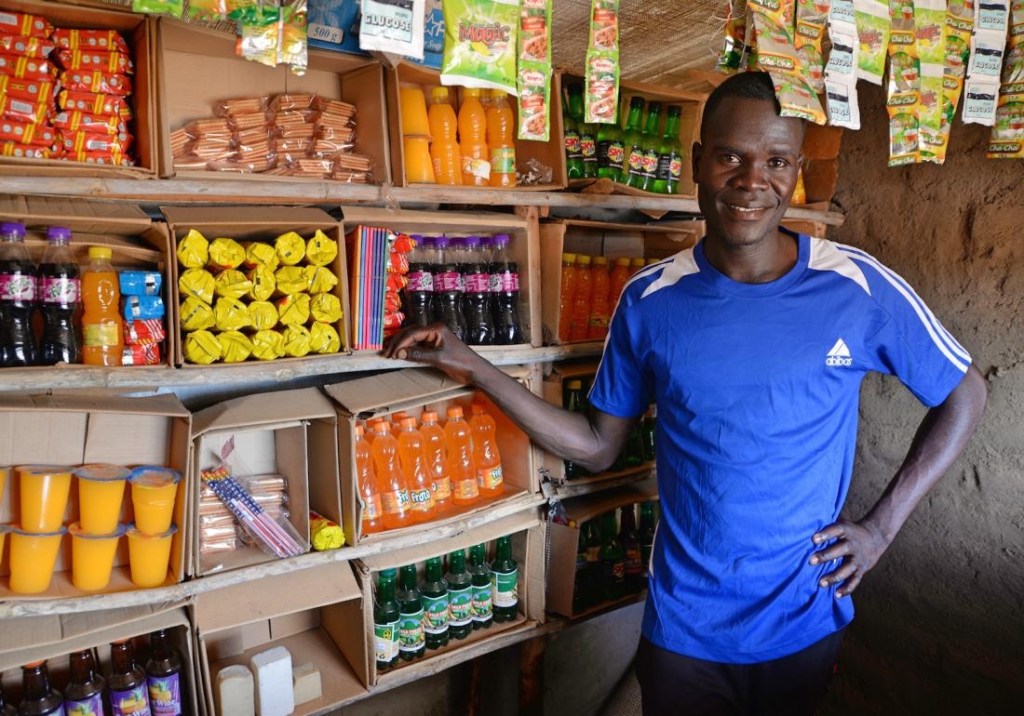
When Isaac got his cash grant, he chose to set up a grocery store at a roadside in Imvepi refugee settlement.

‘’At first I was selling mainly food stuffs but when I added soft drinks I began realizing more profits. With this money I’ve been able to buy school uniforms for all my uncle’s children, books, pens and other scholastic materials. My wife also just gave birth recently and this shop has helped me to look after her and buy all items the baby needed,’’ he says. This youthful father of one is, together with his wife, taking care of five other children belonging to his uncle. His uncle opted to stay back in South Sudan due to poor health and asked Isaac to escape with his children. At 22, Isaac is now playing a father figure to 6 children.

Yavu Victoria, 63 years old

Victoria also set up a grocery after receiving her cash grant.

‘’I have now been operating the grocery for four months and there is a lot to show out of it. The children’s health has greatly improved, am able to change their diet at least twice a week. I get them vegetables, fish and sometimes meat,’’ explains the 63-year-old. Victoria fled South Sudan in December 2016 with four grandchildren, her daughter remaining behind. After settling in at Imvepi settlement, Victoria agreed to become a foster parent to two more children – unaccompanied minors who lost contact with their parents when fighting broke out and walked on their own to Uganda.

At her shop, Victoria sells soft drinks, food, and basic household items. 

‘’My plan now is to expand it; I want to add fresh vegetables to my merchandise as there is a ready market for them,’’ explains Victoria.

Joel Moi, 30 years old.

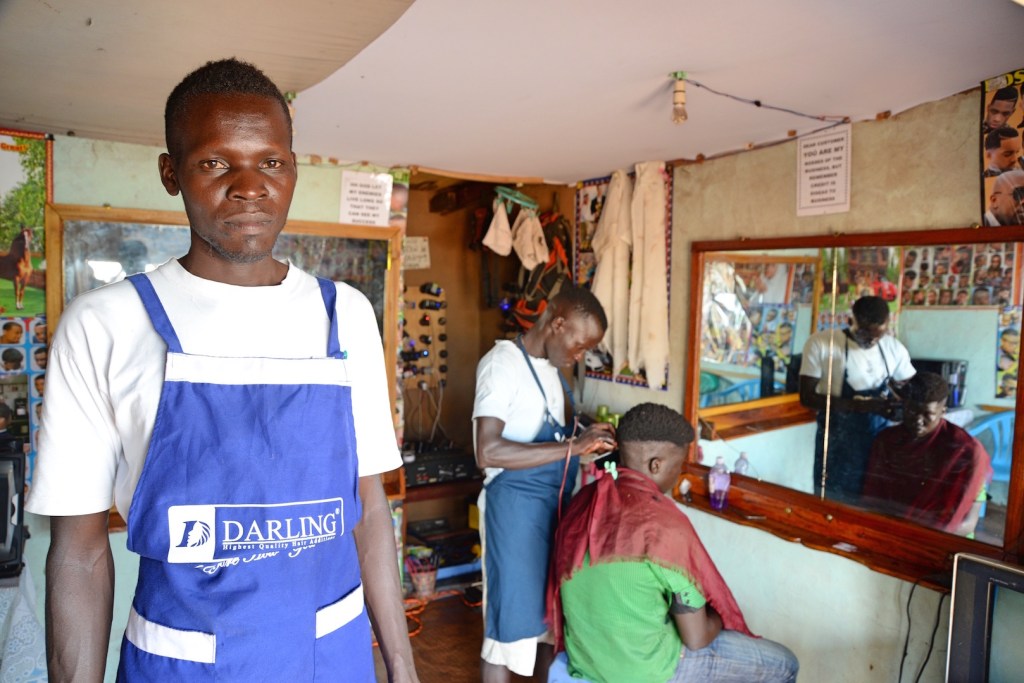
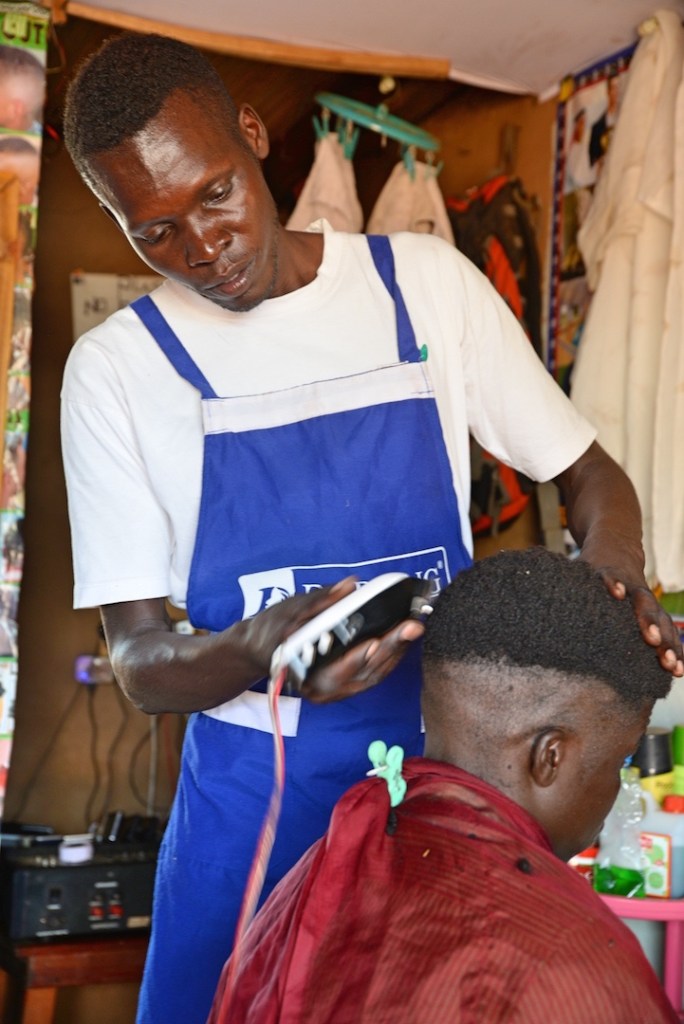
Meet one of the most sought-after barbers at Imvepi settlement. Joel is employing two fellow refugees at his unisex salon. ‘’I knew there were so many youths who would need haircuts in the settlement and that’s why I decided to set up this salon. Everyday, we get not less than seven customers coming to shave. Sometimes, like during the weekend, we can get up to 15 customers,’’ narrates Joel. Joel is a father of two children and taking care of two other children belonging to his sister. She could not be traced when the family fled for Uganda.

Ide Jessica, 23 years old

Since they’d arrived, 23-year-old Jessica wanted to set up a clinic at Imvepi settlement. Their family of two biological children and one fostered child had part of the money needed to start the clinic but when it opened, many of the shelves had no drugs on them. More capital would be needed to fill them up. So when the family got a cash grant, Gun-Lomo clinic (I need power from God) became a bee-hive of activities. ‘’We bought more medicines and this helped the clinic to operate effectively. We receive more than 20 patients daily mostly suffering from malaria, diarrhoea and cough. The majority of these are children are below the age of five,’’ narrates Jessica. Jessica’s clinic serves both refugees and host communities. It is the very first privately owned clinic to open up at Imvepi settlement main trading centre.

More than 400 businesses started thanks to cash grant

These are but just a few cases to demonstrate that conditional cash grants to refugee communities are able to increase household incomes, boost livelihoods and trigger self-sufficiency.  

Prior to receiving the grants, beneficiaries were trained in business selection and management for better utilization of the fund. Fast forward to June 2018, hundreds of small businesses have sprouted at Imvepi refugee settlement as a result of the grants. Hundreds of refugee families that benefited from this project are today owners of small groceries, saloons, eating joints, market stalls, phone charging systems, among other income generating activities. World Vision is also currently providing cash grants to hundreds of other vulnerable refugee households at Omugo refugee settlement.

Why has the world closed its eyes to the cries of South Sudanese refugee children?

Featured

By Moses Mukitale

First published in the Thompson Reuter’s

https://news.trust.org/item/20170823150005-kb5av/

Their questions are relentless. The children I meet nearly every day are desperate for answers.

“Moses, shall we ever leave this camp? Moses, will we ever see our parents again? Moses, will we have enough food next month? Moses, I need books. I want crayons. I want shoes.”

One boy even asked me about how his English football team Arsenal, are doing. He last watched an Arsenal game two years ago, he tells me. I told him that they won the FA cup and he rejoiced.

Life for refugee children from South Sudan is heartbreaking. Some have witnessed their parents murdered in cold blood. Others recount horrific experiences of sexual assault or watching their family members being kidnapped.

I watch hundreds of grief-stricken refugees arrive in Uganda everyday. There are women who clutch babies to their chest, children without shoes never imagined that one day they would be ferried on cattle trucks to a refugee settlement.

The Writer, Moses Mukitale takes a selfie with some of the refugee children from South Sudan

There are now one million South Sudanese refugees in Uganda. They never asked to sleep under plastic roofing sheets. They never asked to walk for weeks fleeing their homes and communities.

They had big dreams and hopes for better education, good families, good neighborhoods, proper health care and to live happily ever after. But those hopes are now in the past.

My friends from other parts of the world are in disbelief when they see the situation for themselves.

“Donor fatigue,” they explain to me when I ask why more isn’t being done to help the refugees. This phenomenon means people no longer donate to charitable causes, although they have done so in the past.

But how about for causes like the South Sudan refugee crisis where donations are scarce? Is that fatigue or simply choosing to close one’s eyes to the cries of innocent people?

It’s also been explained to me that people do not like to donate to politically motivated crises, that they would rather channel their assistances to victims of natural catastrophes.

Still, donors are forgetting something fundamental: all calamities are catastrophic regardless of their cause. The only difference comes in context.

None of people from South Sudan ever took part in a vote to flee their homes. They ran because they had no choice, they feared their life would end if they remained in South Sudan.

Last week, 16-year-old Grace confronted me.

“Until when shall we get this little food? It’s not enough. You keep telling me that soon we shall be able to get enough food to eat. When will that be?”

Grace and other children are running out of patience. They have been promised over and over that things are going to get better. When I meet them, I offer apologies and words of encouragement. Words are not enough though.

Uganda opened its doors to their neighbours and welcomed refugees to our country. It was and still remains a reflex action, an act of love and kindness from the Ugandan government. Still, we can’t do it alone.

Other governments have promised to assist. In June, Uganda and the UN appealed for $2 billion to support the country’s total refugee caseload of 1.3 million for the next four years. Just $350 million has been raised.

We’re told that the other nations are debating “whether it is necessary to welcome refugees plus to cater for their needs.”

We cannot wait. South Sudanese refugees continue to arrive by the cattle truck full every day. We cannot choose to close our eyes to the cries of innocent suffering people.

“No one has ever become poor by giving.” Anne Frank once said.

A day in the life of a fleeing refugee family

By Moses Mukitale (World Vision Uganda Communications Officer 2017)

They waddle feebly into the verification room, haggard and pale, longing for something to put into their stomachs. Their eyes are drowsy, feet all covered in dust. For the last seven days, 27-year-old Maneno Rose has been on the road, trekking helplessly with her 3 little children from South Sudan.

Roses Maneno, extreme left with her three children at the refugee verification center in northern Uganda

Jonas Ladu 10, Joel Anduga 9 and Betty Poni 3 are all frozen with hunger as they approach the World Vision desk to receive two packs of high energy biscuits each. This will be the family’s very first meal in Uganda. A World Vision staff Masumba Rahima helps 3-year-old Betty Poni unpack her biscuits. The other 2 children and their mother ferociously tear the packs and pounce on the contents inside. After consuming her fourth biscuit, Rose finally manages to talk.

‘’I don’t know where my husband is. He was not home when we were attacked. I just picked the kids and we ran out.’’ Rose explained in a sunken voice.

A World Vision staffer Rahima hands out High-energy biscuits to Rose Maneno’s household

She eats some more biscuits, beseeching her children to do the same. ‘’We’ve been eating raw cassava tubers from people’s gardens along the way. That’s all we could find. For water, we took from open streams along the way. We drank any kind of water we found because the children would get so thirsty.” Rose adds.

Rose says sometimes the family could walk for a whole day without finding any gardens where to uproot raw cassava. On such occasions, the children would refuse to walk again.

Rose feeds her ten year old daughter Betty Poni on high energy biscuits

‘’I would keep promising them that we are finding a garden very soon. But there were not many gardens left with cassava tubers. People ahead of us had cleared much of it. The children would cry and complain about hunger and pain in their legs. Betty would ask me to carry her on my back but I couldn’t. We would sometimes spend two days resting in the bush.

It was not safe sleeping along the road so we avoided it,” Rose adds.Rose’s first born, 10-year-old Jonas Ladu immediately assumed responsibility over his two siblings. His mother says while on the way he would not eat until he was sure there was enough for all three of them. This same trait was witnessed as the children received high-energy biscuits from World Vision. Jonas came third.

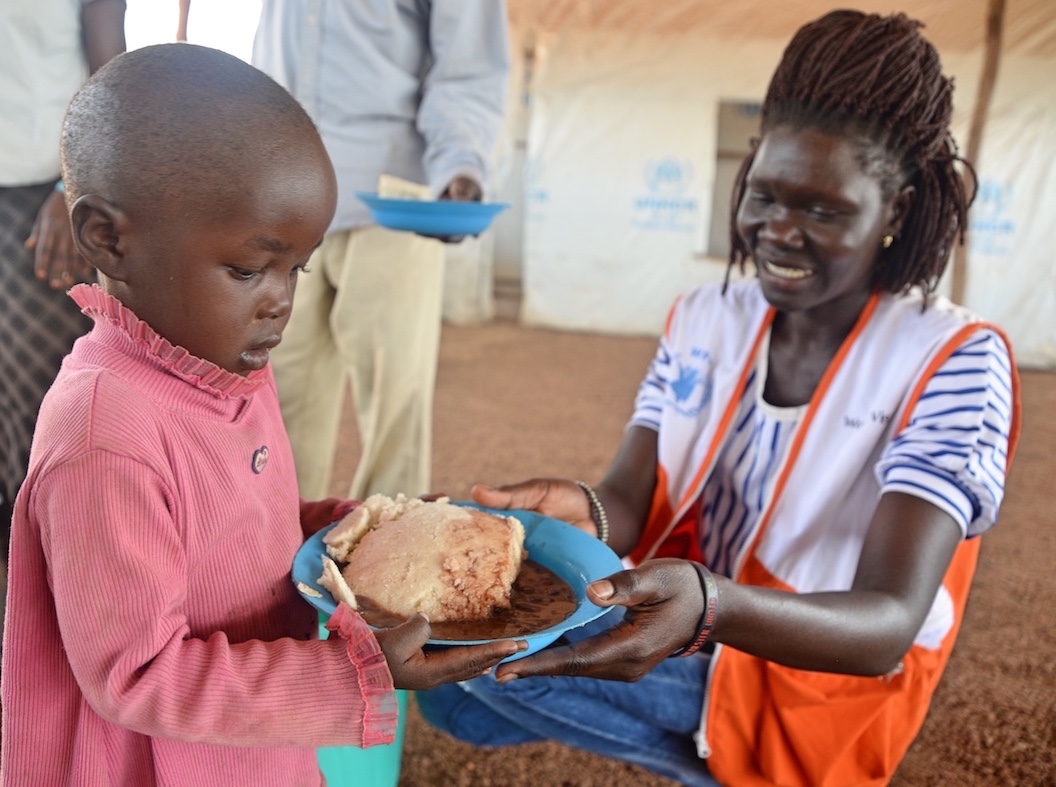
Rahima hands out a hot meal to little Betty Poni. The food is made of corn meal bread and bean soup

After eating half a pack each, the children’s faces begin to ease. Little Poni can be seen attempting to feed her elder brother Joel from her mother’s laps. Their mother is surprised that for the first time in over four days, the three children are playing with each other.

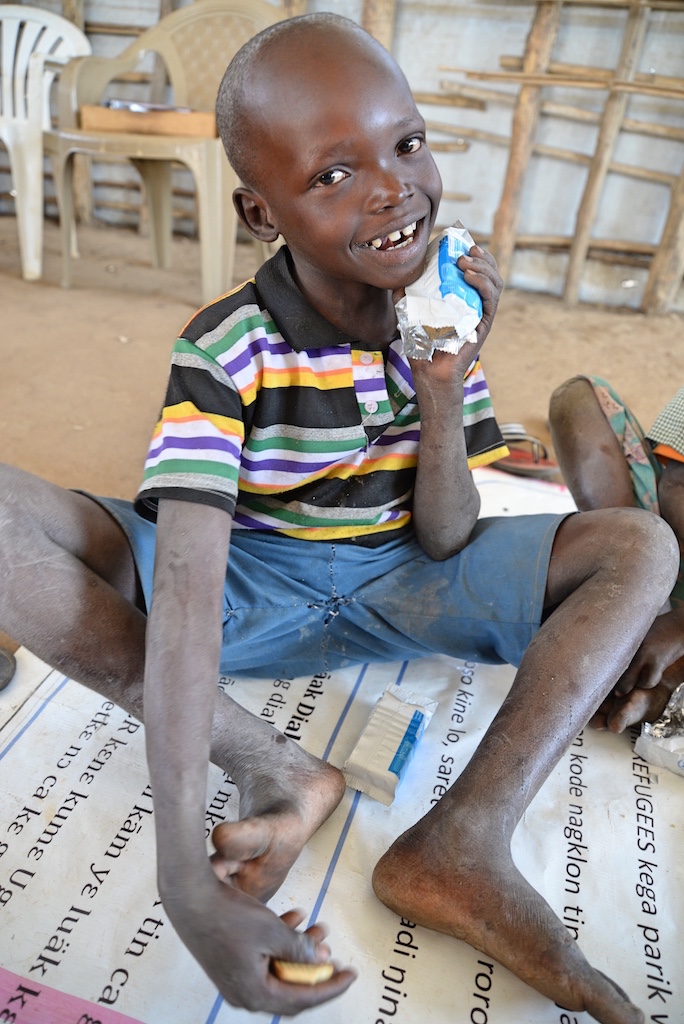
‘’They were not talking at all. They were so hungry and very tired,” Rose says. Jonas eventually affords a smile. It’s a miracle how quickly the biscuits worked on him. When asked how they taste, Jonas beams timidly and says ‘’very sweet.”

Jonas beams with a smile after eating some of the biscuits

Poni signals her mother for more biscuits, which had by now been kept away in the family’s only polythene bag. Rahima the World Vision staffer giving biscuits to all new arrivals at Goboro border post is not surprised that the three children have revived in a just short while.

‘’I see this almost every single day. Hundreds of refugees come in looking very sick and frail. But once we give them these high energy biscuits plus water, they quickly change. All of a sudden the children begin to run around, to play, and they respond to questions. Before they eat these biscuits, it’s even hard to interview them or pick their details. These biscuits have some glucose that rapidly replenishes their energy. They are not the ordinary biscuits,” explains Rahima, a World Vision distribution assistant.

World Vision partners with WFP to distribute these wonder biscuits at four border posts.

According to the World Food Programme, high energy biscuits are wheat-based biscuits that provide 450 calories with a minimum of 10 grams and max of 15 grams of protein per 100 grams, fortified in vitamin and minerals. They are always given in the first days of emergency when cooking facilities are scarce. The biscuits are blended with wheat flour, hydrogenate vegetable shortening, sugar, soy flour, invert syrup, high fructose, corn syrup, skimmed milk powder, sodium and ammonium, bicarbonates, salt, minerals and vitamins.

But World Vision is not only giving biscuits to new arrivals. The organisation is also providing hot meals to new arrivals. The meals comprise of beans, maize meal and porridge. It’s the very first hot meal refugees like Rose and her 3 children are having after seven days of wandering.

And no sooner had the food been served than the four rapidly washed their hands and dived into their plates. For the next ten 10 minutes no one was talking, the sound of enthusiastic fingers plunging into the bean soup reverberated.

‘’Tonight we will sleep very well, we have not eaten like this in a very long time,” Rose says after eating.

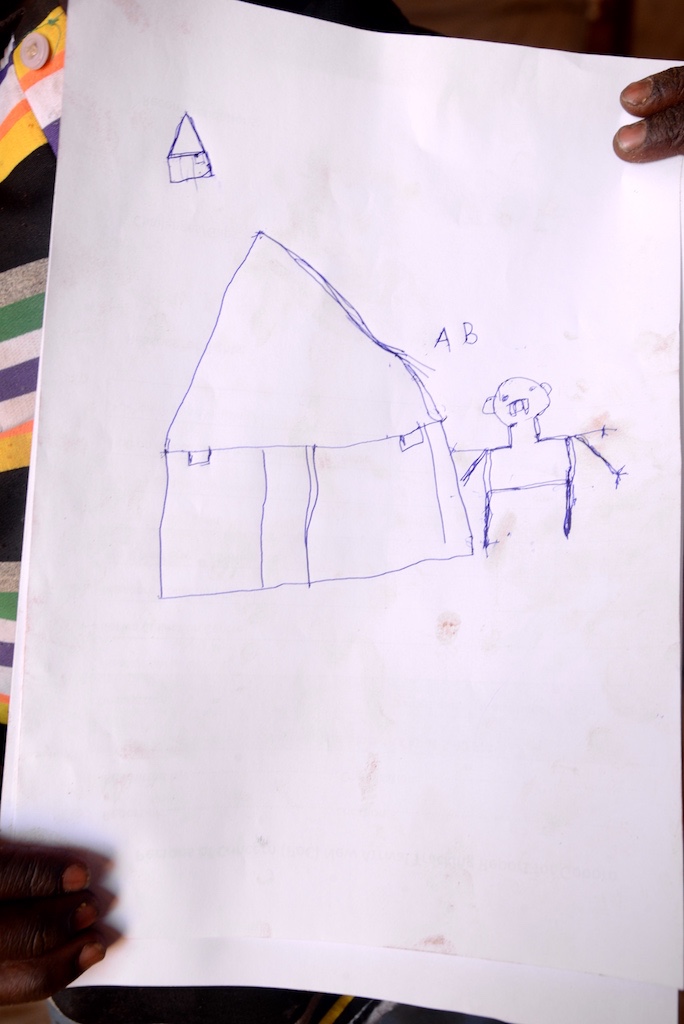
Later, Jonas draws something he misses the most about South Sudan. After five minutes, he has created a grass thatched hut on the paper.

‘’That was our house. My clothes are there,” Jonas explains and then keeps quiet again. He’s a young lad of few but very calculative words.

Because of continued insurgence, Jonas and his sibling Joel have been out of school for now two years. Rose is hopeful that they will enrol for school in Uganda.

Jonas loves aeroplanes and his mother tells me he wants to fly one someday. For now, the family is out of danger. Sadly their throbbing voyage as refugees has just begun. The reality will hit once they receive their plot of land and commence to restart living in a new home here.

NOTE: Story published in 2018 for World Vision Internationals

https://www.wvi.org/uganda/article/their-very-first-meal-border